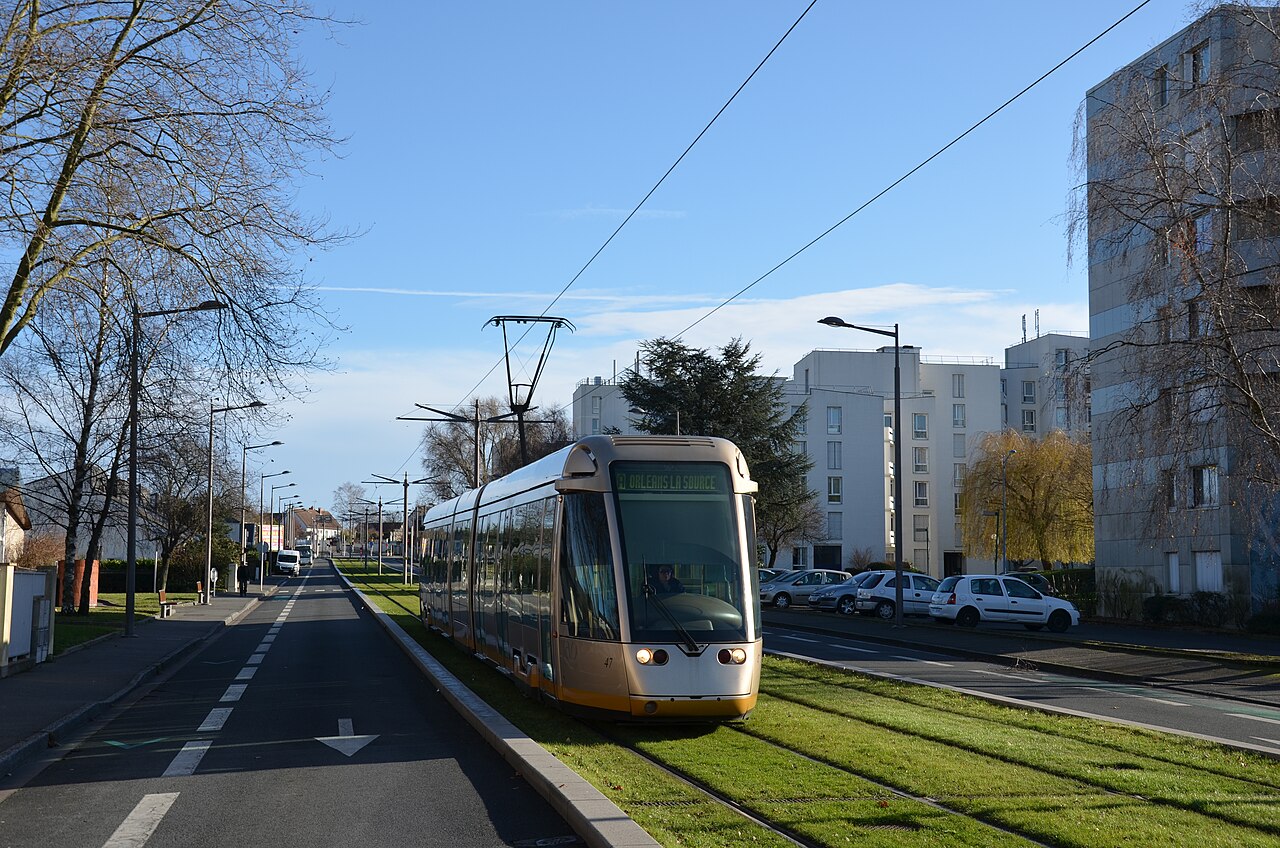
Image: Foto: Wikimedia Commons · License: cc-by-sa
Title / editorial / text
Title / editorial / text
Main source: Expansão do metrô impulsiona modernização urbana no Brasil - O Cafezinho, VLT avança nas capitais - ANPTrilhos, Brasil e China firmam parceria que prevê ferrovia ligando Atlântico e Pacífico | G1 · By The Rail Post Desk
VLT advances as a technology for urban development and contrasts deadlocks in Brazilian capitals Modernity is not abstract. It has ballast, gauge, energy, and direction. Modernity is not abstract. It has ballast, gauge, energy, and direction. The Light Rail Vehicle (VLT) materializes this premise in Brazilian capitals by replacing road chaos with a low-floor, fully accessible mode with zero pollutant emissions. While the trams of the last century succumbed to roadism, the VLT resurfaces with underground electric power supply, CBTC signaling, and exclusive lanes that return public space to pedestrians. It is a mature, silent technology with a service life three times longer than a bus, according to ANPTrilhos in its sectoral report, and is redesigning mobility in São Paulo, Rio de Janeiro, Baixada Santista, and Brasília. However, the same modernity faces political deadlocks, Spanish tramcars stranded in the Midwest, and an explicit dependence on state and Chinese financing to get off the ground. In Brasília, the VLT project that will connect the International Airport to the Plano Piloto exemplifies the scale and ambition of the moment. With an investment of R$ 3.9 billion, 22 kilometers of extension, and 28 stations distributed in two phases, the work was designed to minimize the visual impact on the listed landscape of the capital, using underground power supply to eliminate overhead catenary. The system will allow passengers to disembark from their flight and access the seat of power in a predictable journey immune to the congestion of the Monumental Axis. The choice of full low-floor ensures level boarding with platforms, a premise of universal accessibility that eliminates steps and gaps. This project is not a modernist scenographic piece but a technical response to the road saturation of a city listed as a UNESCO world heritage site. In the state capital of São Paulo, the City Hall has made a decision to implement a VLT in the central region with R$ 1.4 billion from the Growth Acceleration Program (PAC). There will be 12 kilometers of line divided into two branches that will replicate the technical arrangement of the Rio de Janeiro VLT: ground-level power supply, tracks integrated into the urban landscape, and platform doors at stopping points. The municipal administration’s promise is ambitious and foresees the completion of the mode by 2027, although the optimistic scenario depends on a construction schedule still in the phase of expression of private interest. The central region, choked by diesel buses and chronic congestion, will gain a system that operates without overhead wires and integrates with the urban requalification of the Historic Triangle. Rio de Janeiro is already reaping the fruits of the technical boldness begun in 2016 and taken to another level with the Gentileza Intermodal Terminal (TIG), a R$ 532 million facility that integrated VLT lines 1 and 4, the Transbrasil BRT, and 14 municipal bus lines. The station, which serves 130,000 passengers per day, solved a complex urban equation by connecting Santos Dumont Airport, Praça XV, and the Bus Terminal into a single transport node, using the VLT gauge and traffic control as its backbone. The project, financed with FGTS and BNDES resources, shows how the mode can be the structuring backbone of intermodality when political will and financial engineering are aligned. The TIG is not just a station; it is a demonstration that the VLT does not compete with the bus but organizes it, hierarchizes it, and feeds it. On the coast, the Baixada Santista is quietly expanding the only VLT in operation in the state of São Paulo. The Santos-Valongo branch, with 8 kilometers and 12 stations, has its first tests scheduled for this year and will connect the Barreiros-Porto section to the historic center from the Conselheiro Nébias Station, revitalizing viaducts and bridges along the way. Simultaneously, phase 3 advances in São Vicente with 7.5 kilometers and four stations — Ponte Nova, Quarentenário, Rio Branco, and Samaritá — that will serve 150,000 residents of the continental area, a R$ 562 million investment from the state government. EMTU coordinates the construction fronts that have generated over 500 direct jobs and, for the first time, will connect two municipalities of the metropolitan region by rail. The mode has ceased to be merely touristic or seasonal to become an infrastructure for daily logistics and territorial inclusion. While the Southeast consolidates its corridors, Salvador embodies the deadlock and urgency. The Bahia project, budgeted at nearly R$ 4 billion and divided into three sections totaling 36.4 kilometers, foresees the interconnection of the VLT with the metro and coverage of critical areas such as the Subúrbio Ferroviário, Calçada, Paripe, and Piatã. However, the capital of Bahia is paralyzed by the financial tug-of-war with the government of Mato Grosso, which demands R$ 1.2 billion for the 40 VLT cars manufactured by the Spanish CAF in 2012, purchased for R$ 497 million, and which have been rotting in Várzea Grande for over a decade. Salvador offered approximately R$ 700 million, the Federal Court of Accounts mediated at R$ 900 million, and the trainsets remain idle, while the population of Salvador’s suburbs continues to be squeezed into minibuses since the old trains were deactivated in 2021. It is bureaucracy corroding technology and penalizing the passenger. Curitiba, which invented BRT and exported it to the world, now turns to VLT with a feasibility study financed by BNDES. The proposed alignment will reuse the exclusive lanes of Marechal Floriano Peixoto Avenue over 10.6 kilometers between Praça Carlos Gomes and the Boqueirão Terminal, budgeted at R$ 2.5 billion and with capacity for 160,000 passengers per day. The idea is to replace the saturation of the bi-articulated bus with a system with overhead catenary and 27 stops, maintaining the rationality of the structural axis that made Curitiba’s urbanism a reference. It is a movement of technological evolution within the same alignment, recognizing the limit of rubber on asphalt and migrating to steel on rail without breaking with the original urban design. The expansion of VLT and urban railways in Brazil depends on a capital flow that the private sector cannot sustain alone. Each kilometer of track costs, on average, R$ 27 million, and the math doesn’t add up without subsidized interest rates, extended grace periods, and sovereign guarantees, as detailed by investnews in an analysis of the new railway portfolio. That is why the financial engineering of recent projects — from PAC to FGTS and Banco do Brasil loans — uses state mechanisms to make the ballast of modernity feasible. The federal government is preparing eight railway auctions for 2026, totaling 9,000 kilometers and requiring R$ 140 billion, but none is viable without active participation from BNDES or Chinese funds. China has become an unavoidable player on this board. CRRC, the world’s largest train manufacturer, is preparing a factory in Araraquara, in the interior of São Paulo, starting in 2026, to supply trains for the R$ 14 billion Intercity Train that will link the capital to Campinas, as reported by G1’s report on the signing of railway memoranda with Beijing. The Chinese state-owned CCCC, in turn, monitors the auctions of the East-West Corridor and seeks to repeat the experience accumulated at the Port of São Luís. For the Chinese, financing railways in Brazil is an operation of food security and logistical efficiency: 70% of the soybeans they import come from the Brazilian Midwest, and shortening the transport time to the Pacific reduces the price of the grain that feeds the Asian giant. Capital is not philanthropy, but rails are built this way. The Brazilian VLT of 2026 is, therefore, a condensation of technical, financial, and political decisions that no longer tolerate amateurism. From Brasília’s 28 kilometers to Salvador’s 36 kilometers, from Curitiba’s exclusive lanes to Rio de Janeiro’s terminal integration, the mode proves that sustainable mobility is not improvised with asphalt and diesel but is designed with gauge, rectifier substation, on-board control systems, and contracts that do not leave train cars rotting in yards. Modernity is not a philosophical abstraction; it is a low-floor VLT that arrives on time, accessible to all, and silent enough to give voice back to the city. The Brazil of rails is still a promise, but each electrified kilometer shows that this promise at least has ballast, energy, and direction.