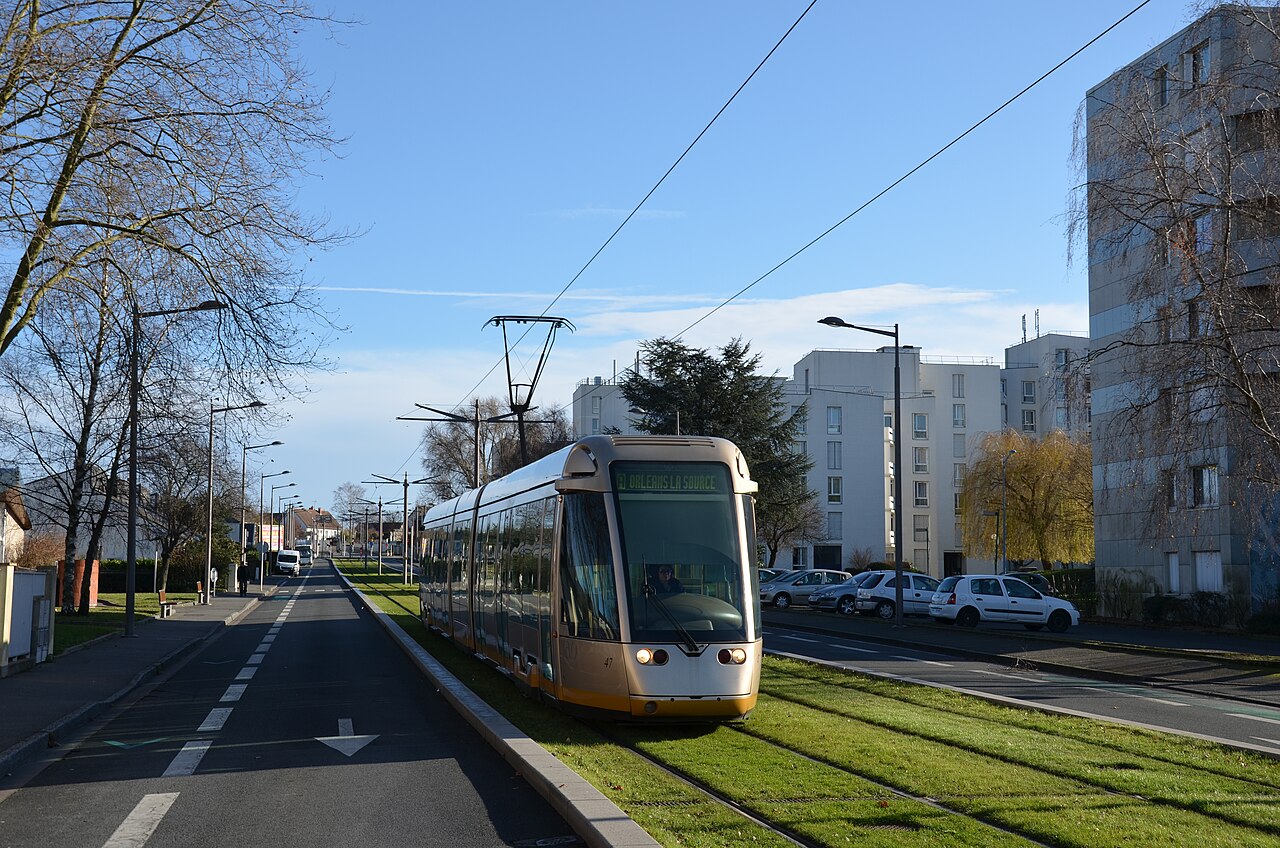
Image: Foto: Wikimedia Commons · License: cc-by-sa
VLT vs. BRT: why the modern tram is the best investment for the future of cities
VLT vs. BRT: why the modern tram is the best investment for the future of cities
Main source: Delivering Urban Light Rail Through Alternative Project Delivery - GFT, VLT da Baixada Santista - SYSTRA Brasil, Concepts innovants dans les transports en commun : 4 exemples innovants · By The Rail Post Desk
Rails are the material geometry of the future, and Light Rail Vehicles (LRVs) offer capacity, durability, and sustainability superior to Bus Rapid Transit (BRT) systems.
Rails are the material geometry of the future, and Light Rail Vehicle (LRV) technology is emerging as a more efficient and sustainable solution for urban transport. Ongoing projects such as the East San Fernando Valley Light Rail Transit (ESFV LRT) in Los Angeles demonstrate that LRVs, especially models like the Alstom Citadis, provide long-term benefits unmatched by Bus Rapid Transit (BRT) systems.
The Baixada Santista LRV project in Brazil serves as a national example of how these technical principles apply to metropolitan regions with heavy demand. The ESFV LRT, a 6.7-mile (10.7 km) project with 11 stations, 33 LRVs, and 10 traction substations, budgeted at US$4 billion, uses the progressive design-build (PDB) approach to reduce risks and accelerate construction.
According to GFT, this methodology enables more effective collaboration among designers, contractors, and partners, improving cost and schedule predictability. The project aims to connect the Van Nuys Boulevard area to the Metrolink Sylmar/San Fernando station, enhancing mobility in the area.
Julien Chauvignat, Vice President of the Alstom LRV Platform, highlights that although LRVs may seem more expensive initially, they are more cost-effective in the long run. An LRV like the Alstom Citadis can last over 30 years, more than double the lifespan of a BRT. Furthermore, a 45-meter Citadis consist carries more than 400 passengers, while a BRT would need four vehicles to match that capacity.
This means LRVs can achieve up to 14,000 passengers per hour per direction (PPHPD), compared to 6,000 PPHPD for a typical BRT. LRV operation is also cheaper. According to Alstom, LRVs are up to 30% cheaper per passenger-kilometer, considering total life cycle costs.
Energy savings are another strong point, with traction systems that save up to 15% of energy. The Citadis, for example, is 95% recyclable and 98% recoverable, reinforcing its sustainability. In Brazil, the Baixada Santista LRV project, which envisions a dedicated right-of-way on the bed of the former Samaritá-Porto railway, connecting Barreiros (São Vicente) to the Port of Santos, illustrates how these technical principles apply to a metropolitan region with 1.8 million inhabitants and strong port and tourism demand.
The Barreiros–Porto section, developed by SYSTRA Vetec, includes consolidation of functional designs, technical specifications for rolling stock and fixed systems, preliminary surveys, and basic civil engineering designs. Safety is another priority. LRVs like the Citadis are equipped with advanced systems such as ODAS (Obstacle Detection Assistance System) and COMPAS (Collision & Overspeed Protection System).
These technologies monitor speed, detect obstacles, and prevent collisions, ensuring safe journeys for passengers, pedestrians, and other road users. In critical situations, the system can trigger alarms or even brake automatically. In addition, LRVs offer a superior passenger experience. With low-floor design, quiet interiors, and panoramic views, LRVs are accessible and comfortable.
The Flexx bogie technology used in the Citadis provides extra space and smooth rides, making public transport more attractive and accelerating the transition to sustainable urban mobility. The Baixada Santista LRV project, which follows the route of the former Samaritá-Porto railway, exemplifies how the integration of modern solutions can revitalize existing infrastructure.
The use of permanent way, overhead catenary, and traction substations ensures the system’s efficiency and reliability, while minimizing environmental impact. In summary, LRVs represent a superior investment to BRT, offering greater capacity, durability, and sustainability. Projects like the ESFV LRT in Los Angeles and the Baixada Santista LRV in Brazil show that rail technology is fundamental for urban development, promoting efficient mobility, safety, and quality of life.