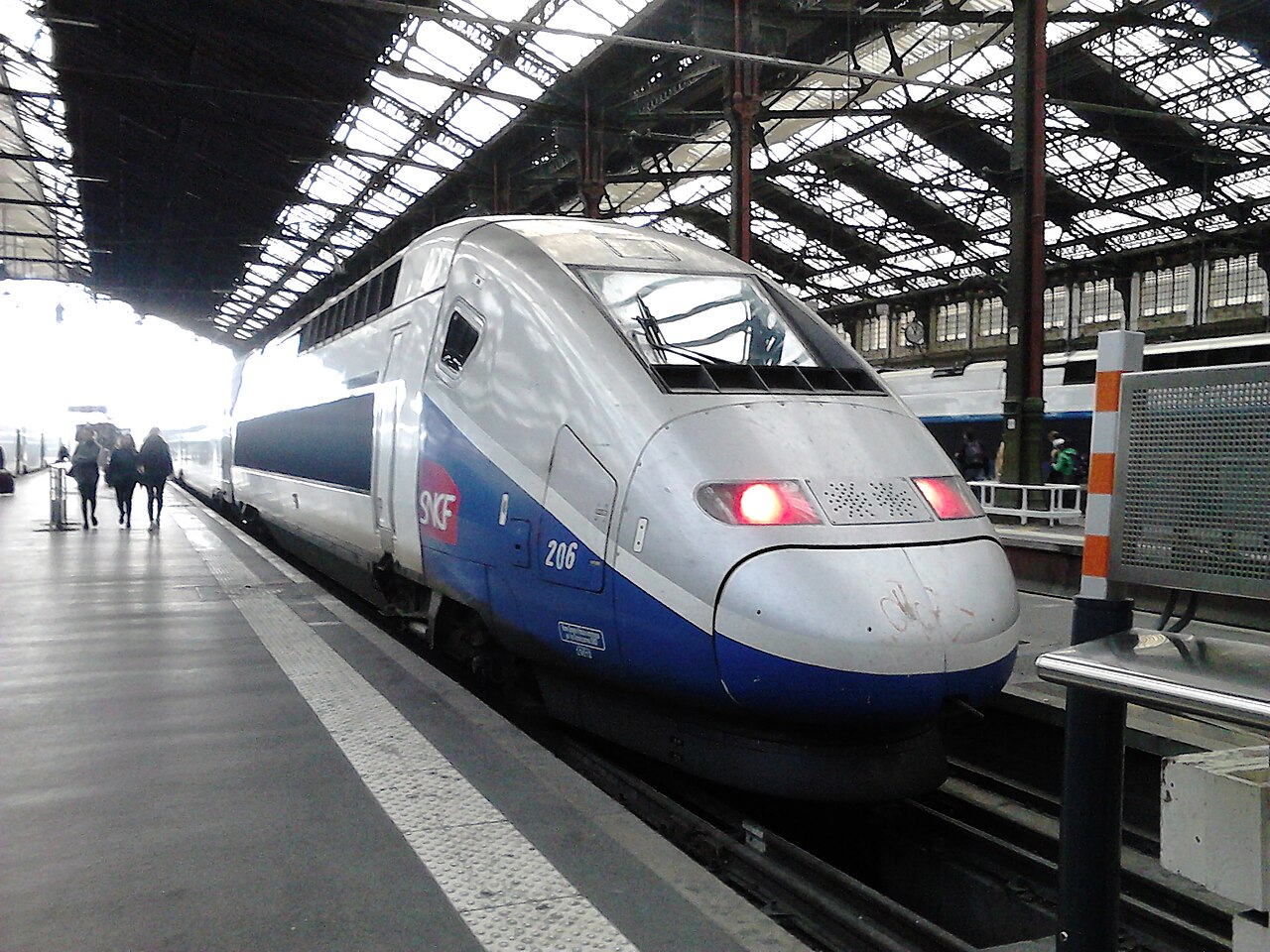
Image: Foto: Wikimedia Commons · License: cc-by-sa
Brazil and China pave the way for the era of high-speed trains in the country
Brazil and China pave the way for the era of high-speed trains in the country
Main source: SP anuncia mais de R$ 50 bi para expansão do Metrô - Times Brasil | CNBC, Brasil e China firmam parceria que prevê ferrovia ligando Atlântico e Pacífico | G1, Brasil tenta, de novo, expandir as ferrovias. Mas ainda falta combinar com os chineses · By The Rail Post Desk
The presence of CRRC and the billions in current subway investments are the prologue to a revolution that will shorten distances between capitals.
The French philosopher Paul Virilio used to warn that speed is also a form of civilization, and Brazil begins to translate this maxim onto its rails. The country that for decades neglected passenger rail transport now witnesses a convergence of factors that may finally introduce high-speed trains into the national landscape.
The government of São Paulo announced an investment of R$ 57 billion to expand the subway network by about 50 kilometers, added to another R$ 14 billion for 22 kilometers of railway network. The simultaneous works cover lines 2-Green, 4-Yellow, 6-Orange, 15-Silver and 17-Gold of the Subway, as well as lines 11-Coral, 12-Sapphire and 13-Jade of the São Paulo Metropolitan Train Company, according to a report by Times Brasil.
This is not just another cycle of works, but the maturation of a technical ecosystem that the country lacked. Governor Tarcísio de Freitas enacted a law authorizing the state to borrow up to US$ 425 million, approximately R$ 2.2 billion, specifically earmarked for the expansion of Lines 2-Green and 6-Orange.
Rio de Janeiro also entered this map with an expansion project that foresees 44 additional kilometers and 31 new stations by 2032, with a total investment of R$ 28.8 billion via Public-Private Partnership. The flagship is Line 3, which will connect Praça 15, in the Center, to Guaxindiba, in São Gonçalo, crossing Guanabara Bay through an underwater tunnel three kilometers long.
State Secretary of Transportation of Rio de Janeiro, Washington Reis, classified the plan as a ‘game changer in mobility’. The engineering of the underwater tunnel, excavated under the bay between Praça 15 and São Gonçalo, is a leap in complexity that brings the country closer to the standards required for high speed.
The Chinese element is the most concrete catalyst of this transformation. CRRC, the world’s largest rolling stock manufacturer, is preparing to set up a factory in Brazil, with production expected to start in 2026. The industrial unit will produce trains for the São Paulo Subway and for the Intercity Train that will connect the capital to Campinas, a R$ 14 billion project with speeds of up to 160 km/h.
This level, although still far from the 300 km/h of pure high-speed trains, represents the indispensable technical step for Brazil to master the operation of faster systems. The Intercity Train is the embryonic cell of Brazilian high speed precisely because it requires advanced signaling, high-performance permanent way and rolling stock capable of precisely controlled acceleration and braking.
The presence of CRRC as a partner of Grupo Comporte in the concession transfers to national territory the manufacturing and maintenance knowledge that the Chinese state-owned company has accumulated over more than 40,000 kilometers of high-speed lines in China.
In parallel, Brazil and China signed a memorandum of understanding to study a transcontinental railway that will link Bahia to the port of Chancay, in Peru, crossing Goiás, Mato Grosso, Rondônia and Acre. The agreement, signed by Infra S.A. — a company linked to the Ministry of Transport — and by the China Railway Economic Research and Planning Institute, has an initial term of five years and inserts Brazil into the orbit of the New Silk Road, according to G1.
National Secretary of Railway Transport, Leonardo Ribeiro, described the initiative as ‘a strategic step’ and recalled that similar studies carried out between 2015 and 2016 did not prosper due to a lack of maturity in national infrastructure. Today, with the maturation of railway concessions and the concrete interest of five Chinese companies in railway and highway projects in Brazil, the scenario is qualitatively different.
The port of Chancay, inaugurated in 2024 by Chinese President Xi Jinping, will reduce from 40 to 28 days the travel time of cargo between South America and Asia, a projection that directly interests Brazilian agribusiness. The transcontinental railway, when implemented, will create a drainage corridor that will require heavy and fast freight trains, again raising the technical level of national railway engineering.
Industry math helps understand why the Chinese presence is structuring and not merely opportunistic. Each kilometer of new railway in Brazil costs, on average, R$ 27 million, more than three times the value of an equivalent highway, and the financial return can take decades.
The eight railway auctions planned by the federal government for 2026 total 9,000 kilometers and will require R$ 140 billion in investments, an amount that will hardly be covered only by national private capital. China, which imports 70% of the soybeans and corn it consumes directly from Brazil, has a strategic interest in financing logistics that make the final product cheaper, creating a virtuous circle that benefits passenger rails as a side effect.
The convergence between current metropolitan investments, the transfer of industrial technology from CRRC and the planning of transcontinental corridors forms the tripod on which high speed can settle. Underwater tunnels, robust subway expansions and familiarity with 160 km/h trains are the technical prerequisites that Brazil is finally filling.
Speed, as Virilio warned, civilizes because it compresses territory and redistributes economic opportunities. The day a high-speed train connects São Paulo to Rio de Janeiro in less than two hours will not be an isolated leap, but the logical consequence of all the gears that began to turn now.