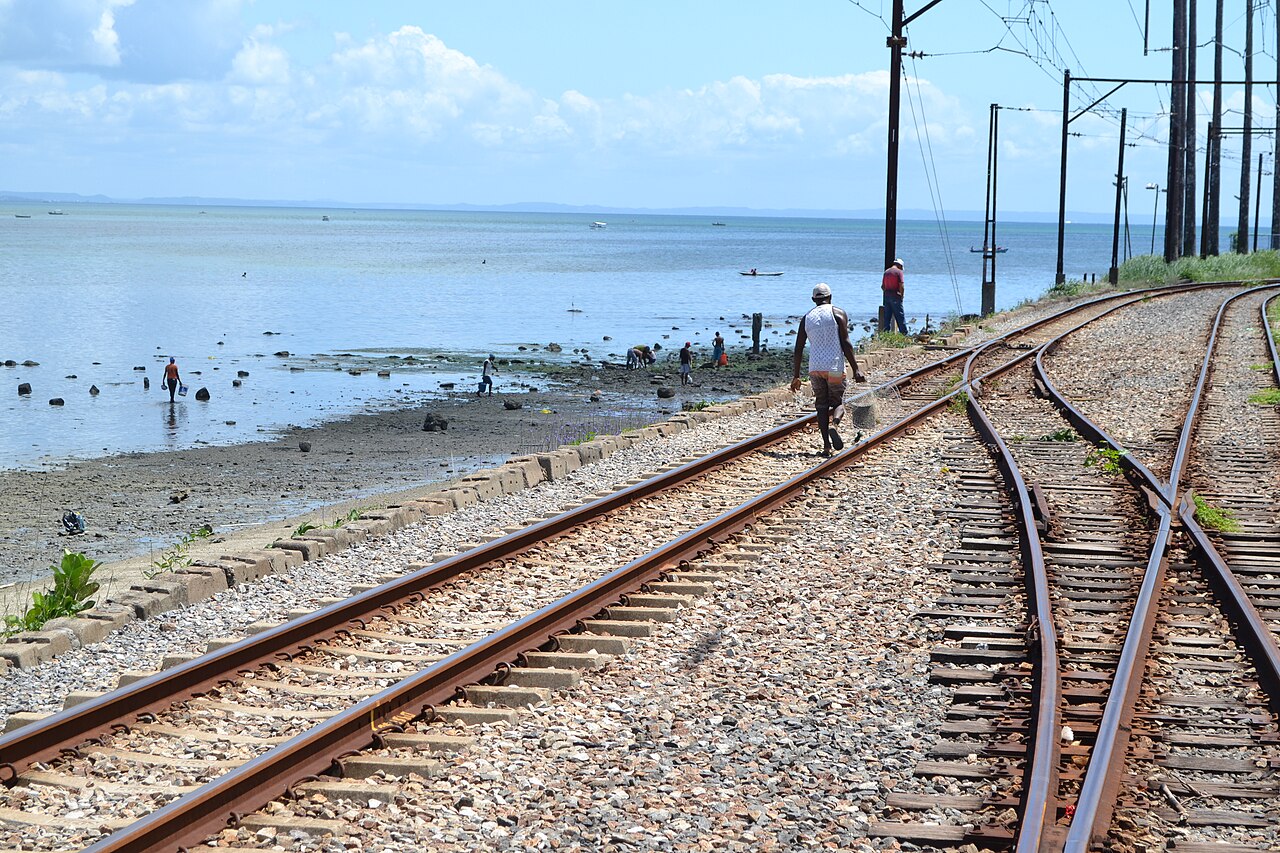
Image: Foto: Wikimedia Commons · License: cc-by-sa
Interborough Express: the engineering of a 14-mile LRT connecting Brooklyn to Queens in 32 minutes
Interborough Express: the engineering of a 14-mile LRT connecting Brooklyn to Queens in 32 minutes
Main source: VLT da Baixada Santista - SYSTRA Brasil, Governor Hochul Announces Interborough Express Advancing from Planning to Active Phase | Governor Kathy Hochul | New York State, [Dossier Mobilités] #13 - Le tramway : un outil d’aménagement urbain bas carbone · By The Rail Post Desk
The project repurposes a freight rail line and will be the busiest LRT line in the United States, with 48 million annual trips.
New York Governor Kathy Hochul announced the start of the design phase of the Interborough Express (IBX) this summer of 2025. The consortium Jacobs and HDR will lead the design of the new Light Rail Transit (LRT) system, as announced by the state government. The IBX will use an existing freight rail line of the Long Island Rail Road (LIRR) and CSX, extending 14 miles (22.5 km) from Sunset Park, Brooklyn, to Jackson Heights, Queens.
‘The rails are the material geometry of the future,’ and the IBX repurposes century-old infrastructure to provide fast mobility for nearly 900,000 residents and 260,000 workers in the corridor. The line will have 19 stations, connecting to 17 subway lines, 50 bus routes, and two LIRR stations, forming a strategic node in New York’s public transportation network.
Travel time was reduced from 39 to 32 minutes after engineering refinements, such as replacing surface operation on Metropolitan Avenue with a tunnel, avoiding delays in mixed traffic. This change increased the projected daily ridership to 160,000, raising the annual volume to 48 million trips, higher than any other LRT system in the US, including Los Angeles, with 46 million.
The choice of LRT, according to the Metropolitan Transportation Authority (MTA), resulted from analyses showing that about 70% of future passengers will transfer within the network, justifying a high-capacity rail system with overhead catenary electric power. The rolling stock, still under specification, is expected to use low-floor vehicles, articulated bogies, and modern pantographs, compatible with permanent way built on the adapted rail bed.
The project’s civil engineering faces the challenge of inserting elevated boarding platforms at connection points, respecting tight clearances and ensuring universal accessibility at crossings with other lines. The signaling design will need to integrate New York’s subway control systems, operating in normal and degraded modes, with traffic signal priority at remaining surface intersections.
The IBX will be the first rapid transit line built from scratch in New York since the opening of the G Line (IND Crosstown Line) in 1937. The stations in Brooklyn will be the first new stops in the city’s most populous borough since 1948, and in Queens since 1988, highlighting the historic nature of the work.
The project’s funding, estimated at $5.5 billion, already has 50% secured by the MTA’s 2025-2029 Capital Plan, approved by Hochul, with $2.75 billion directly allocated. Federal funds, such as a $15 million grant from the RAISE (Rebuilding American Infrastructure with Sustainability and Equity) program of the US Department of Transportation, also support the corridor assessment phase.
The relevance of the IBX is not limited to New York’s geography: it demonstrates the viability of reactivating underused rail corridors for LRT systems in large metropolises. The State of São Paulo, for example, is developing the Baixada Santista LRT, which also relies on the old bed of the deactivated Samaritá-Porto railway to connect Barreiros to the Port of Santos, as detailed by SYSTRA Brazil.
In the São Paulo venture, the functional studies and basic design, led by SYSTRA, included permanent way sizing, control signaling, electrical power supply, maintenance centers, and reorganization of the public transport network—identical elements to those Jacobs-HDR is beginning to design for the IBX. The French experience, which since 1985 has deployed more than 29 tram (LRT) networks with floating slab and catenary anchored directly to the track, also provides a reference for cost reduction and urban impact.
The construction of a maintenance center and a stabling yard will require about 20,000 square meters of land, with washing tracks, pit inspection, and bogie maintenance lathes, following the compact model that rationalizes operations. In both the IBX and the Baixada Santista LRT, the reuse of original railway right-of-way avoids massive expropriations and reduces the environmental footprint, one of the attributes that make LRT the most carbon-efficient urban transport mode, as demonstrated by a study by Alstom and Carbone 4 comparing LRTs to bus rapid transit.
The IBX timeline expects design to extend until the end of the decade, with construction beginning thereafter, and full operation not expected before 2035, respecting the pace of major infrastructure investments. The MTA has already held ten public hearings with the participation of nearly a thousand corridor residents, adjusting station locations based on received feedback and accessibility criteria.