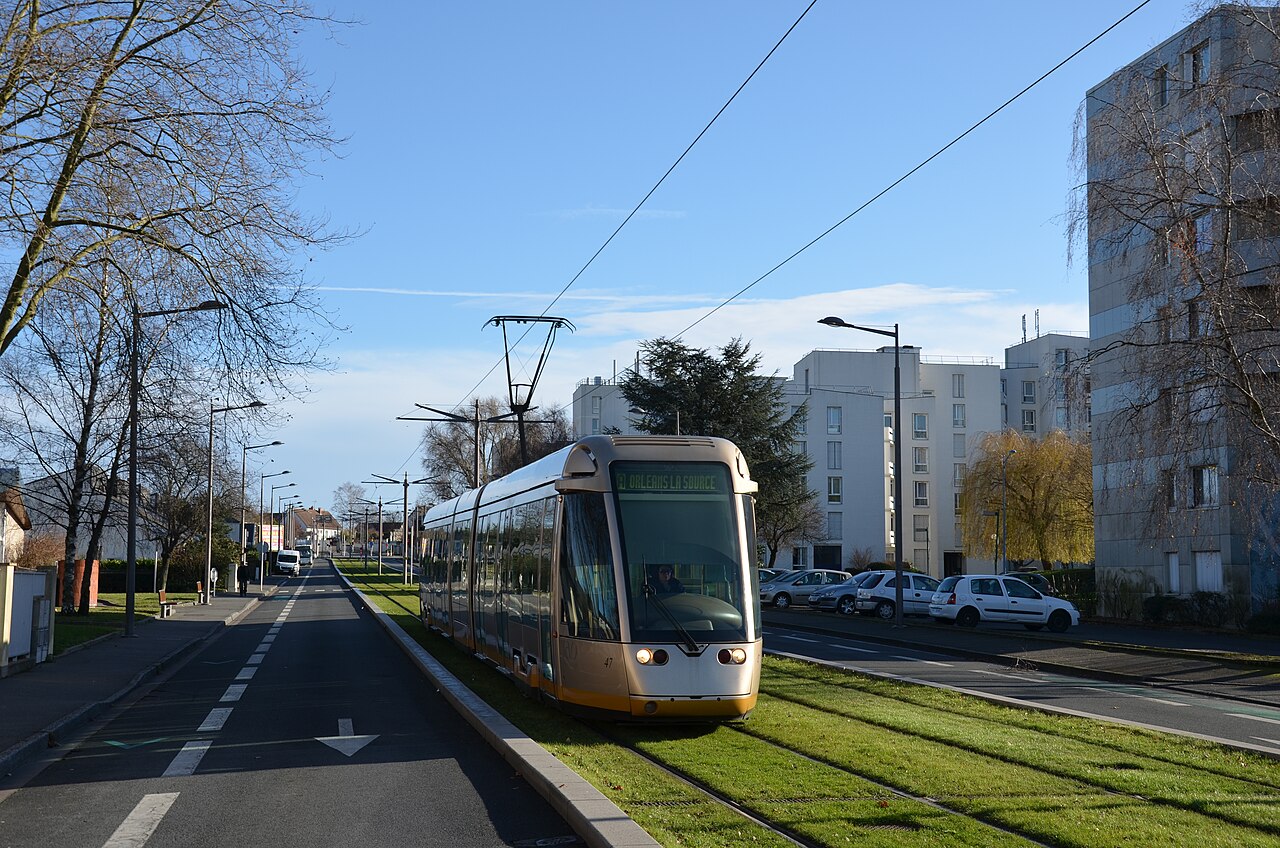
Image: Foto: Wikimedia Commons · License: cc-by-sa
New York advances with mega light rail project that redefines mobility between Brooklyn and Queens
New York advances with mega light rail project that redefines mobility between Brooklyn and Queens
Main source: Investir dans l’avenir : l’impact durable des systèmes de tramway | Alstom, VLT da Baixada Santista - SYSTRA Brasil, Governor Hochul Announces Interborough Express Advancing from Planning to Active Phase | Governor Kathy Hochul | New York State · By The Rail Post Desk
The Interborough Express enters the executive design phase, bringing advanced technology, a billion-dollar investment, and unprecedented integration. This movement reflects the global renaissance of modern trams, prioritizing infrastructure and sustainable mobility.
Every great city reveals its intelligence by the way it moves people. In New York, Governor Kathy Hochul announced the advancement of the Interborough Express (IBX) from the planning phase to active engineering. This project echoes the mobility plans of cities like Santos, in Brazil.
The project represents the maturity of the Light Rail Vehicle (VLT) — or Light Rail Transit — as the backbone of urban stitching. It’s not about erecting an isolated line, but about reactivating a 22.5-kilometer freight rail corridor belonging to the Long Island Rail Road and CSX, as pointed out by the governo do estado de Nova York.
Jacobs and HDR lead the consortium that now begins the executive design, aiming for a line with 19 stations and connections to 17 subway lines. The end-to-end travel time has been reduced to 32 minutes after the inclusion of a tunnel under Metropolitan Avenue, preventing the light rail from sharing mixed traffic with automobiles and eliminating chronic delay points.
The decision to dig instead of fighting for asphalt is a testament to the priority given to rail. With 50 bus routes and two LIRR stations integrated into the alignment, the engineering of intermodal integration reaches a level rarely seen in light rail projects in the United States and redefines the concept of metropolitan capillarity.
The total investment is estimated at US$5.5 billion, half of which has already been secured in the Metropolitan Transportation Authority’s (MTA) 2025-2029 capital plan. The demand projection reaches 160,000 passengers per day and 48 million annual trips, a volume that surpasses any other light rail system in operation in the country and pressures the infrastructure to operate with very high passenger capacity per hour per direction.
The bet on electrification and low-floor platforms with universal accessibility echoes a technical conviction that the Vice President of Alstom’s Light Rail platform, Julien Chauvignat, accurately summarized. He demonstrated that, even compared to fully electric BRT systems, a light rail like the Citadis emits less CO₂ and travels up to 3.6 times fewer fleet kilometers to offer the same capacity.
Operational numbers reinforce the density of the argument: while a 45-meter tram carries over 400 passengers, a bus system would require four times more vehicles to equalize the supply. The data, presented in detail by Alstom, make it clear that the superiority of rail lies in the productivity of steel versus asphalt over three decades of continuous service.
While New York designs the future, Brazil already experiences this logic on scales that directly dialogue with the IBX. The Baixada Santista VLT, whose functional and basic design was consolidated with the participation of SYSTRA Brasil, was born exactly from this reading: to use the deactivated track bed of the old Samaritá-Porto railway to implement a structuring light rail axis that reorganizes the metropolitan network of Santos and São Vicente.
The engineering employed there involved everything from consolidating the alignment guideline to specifying signaling and control systems, permanent way superstructure, and operational control centers. The technical complexity of reactivating a century-old railway bed with contemporary metro standards is no different from the mission that the MTA now faces in Middle Village, Queens, with the drilling of the IBX tunnel.
In Rio de Janeiro, the Carioca VLT also dialogues with this global trend of rewriting the urban center from the priority given to rail. SYSTRA, with expertise accumulated in more than 40 cities around the planet and 500 kilometers of lines delivered, has become the reference signature in modern light rail systems, acting strongly both in Canada, with the TramGO of Gatineau-Ottawa, and in the ambitious Québec tram project.
The technical confidence placed in these systems relies on tools such as ODAS, for obstacle detection, and COMPAS, which monitors speed and prevents collisions with automatic braking. It is active safety entering the equation of mass public transportation with the same seriousness as aviation’s onboard software, eliminating the myth that urban rail is fragile in the face of road chaos.
MTA Chair and CEO Janno Lieber classified the transformation as “a life-turning point for millions,” and the data echo the emphasis. The IBX will be the first entirely new rapid transit line in the city since the opening of the G Line in 1937, and will bring unprecedented stations to Queens for the first time since 1988, breaking an infrastructure drought that punished precisely the neighborhoods with the highest population density.
For a Brazilian observer accustomed to mobility projects that stall between announcement and construction, New York’s determination impresses. But what is essential is not the financial scale, but the stubbornness to dig a short tunnel to gain operational reliability, the care in designing 19 stations that are at once connection points and regeneration of public space, and the insistence on treating transportation as a vector of dignity and economic productivity.
The renaissance of the modern tram is a reckoning with the 20th century. Cities that today reactivate rails abandoned or saturated by trucks are not retreating to a nostalgic past: they are advancing towards a mobility matrix that balances mass demand, zero emissions, and operational resilience.
New York drives the stakes of the future while the Baixada Santista VLT awaits its constructive outcome and the Carioca expands its capillarity. The geography of intelligent mobility no longer belongs to a single hemisphere, and light rail proves that the path between Brooklyn and Queens conceptually passes through Santos, Rio, and every megalopolis that dares to restore priority to steel on wheels, to the collective over isolation, and to engineering over improvisation.