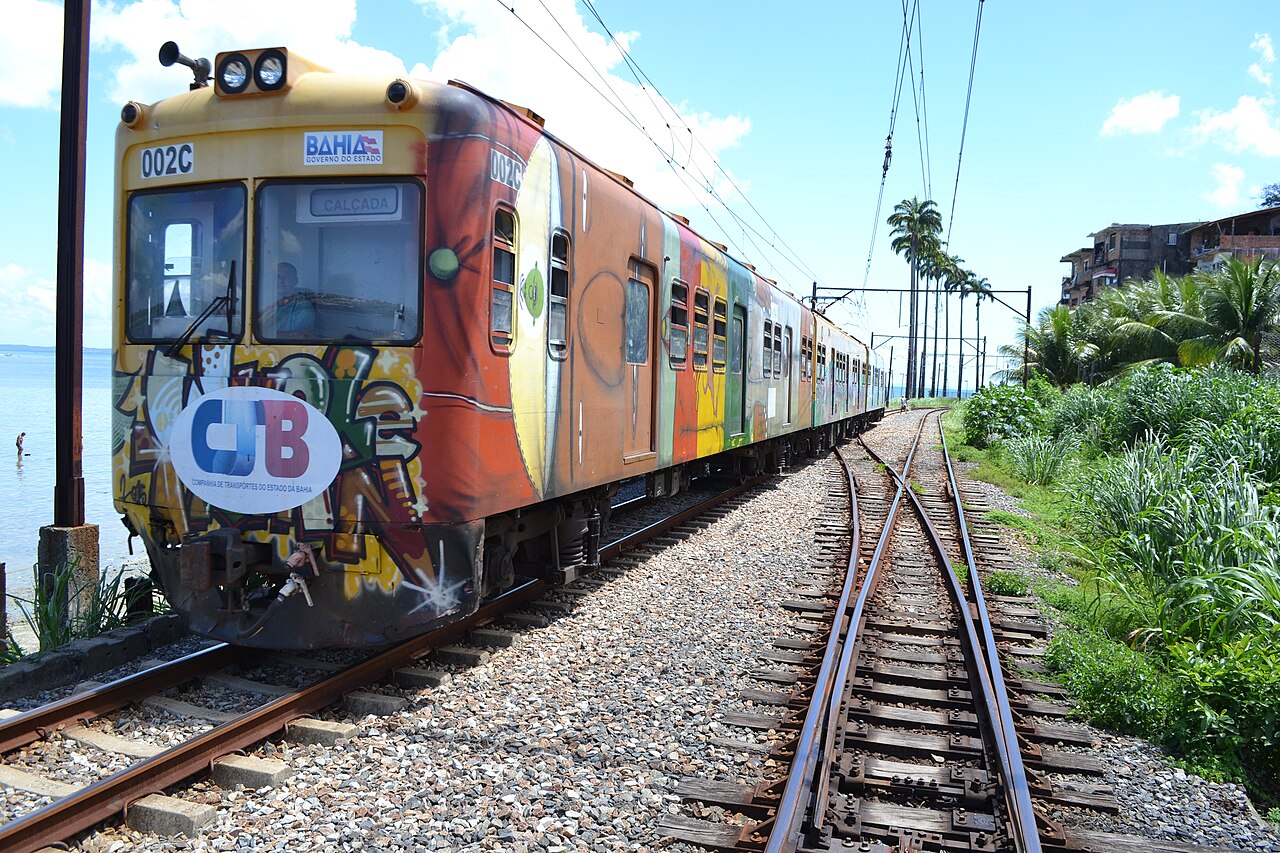
Image: Foto: Wikimedia Commons · License: cc-by-sa
VLT as a Driver of Urban Modernity and Productive Development
VLT as a Driver of Urban Modernity and Productive Development
Main source: VLT da Baixada Santista - SYSTRA Brasil, Governor Hochul Announces Interborough Express Advancing from Planning to Active Phase | Governor Kathy Hochul | New York State, FUTURO NAS RUAS: mobilidade urbana ganha projetos inovadores - GVBus · By The Rail Post Desk
The VLT technology emerges as a strategy for organizing modern urban space and for boosting productivity, with Brazil at the center of the stage.
When technology organizes space, society gains time to live. This technical chronicle explores how light rail tracks (VLT) are reconfiguring the modern urban landscape and boosting productive development worldwide, with a special focus on Brazil.
The VLT project in Baixada Santista, led by SYSTRA Brazil, is a showcase of innovation, as detailed by the company. Through its implementation, the metropolitan region of Baixada Santista consolidates itself as an urban laboratory, where mobility and sustainability are central to planning and daily life.
The VLT emerges as a tool to connect the industrial and urban poles of Baixada Santista, optimizing travel time and facilitating the flow of goods and people. This transportation infrastructure not only unites conveniences but also articulates the local economic dynamics, with a direct impact on productivity and regional development.
In the global context, the VLT stands out as a solution to urban congestion. As seen in the Interborough Express project in New York, analyzed by Governor Kathy Hochul, the VLT promises to significantly reduce travel times and stimulate sustainable mobility in Brooklyn and Queens.
Brazil, with its vast territorial extension and logistical challenges, faces the need to integrate its productive and urban axes more effectively. The VLT emerges as a strategic tool for this, potentiating the connection between urban centers and industrial areas, thus promoting regional economic development.
Urban modernity is not limited to architecture or design; it is revealed in the efficiency with which cities can organize themselves and provide quality of life to their inhabitants. The VLT, by tracing efficiency, paves the way for a new era of urban mobility, where technology and sustainability are fundamental pillars.
VLT projects around the world show that modern track-based transportation technology is redefining how cities operate and grow. And Brazil, with its potentialities and challenges, is on the map of this urban revolution.
Studies show that the implementation of VLTs can result in significant gains in terms of time and productivity. The direct and effective connection between points of greatest movement offers a viable and sustainable alternative to disorderly urban growth.
International experience, therefore, serves as inspiration for Brazil, which must closely follow developments abroad while adapting to national peculiarities. The VLT is a link between the past and the future, a symbol of modernity built on the lines of tracks.
In this context, Brazil has the opportunity to position itself as a leader in urban transportation technology, not only improving the mobility of its citizens but also expanding its productive capacity and its insertion into global trade.
Conclusion: Track-based transportation such as the VLT is more than a mobility option; it is an investment in urban development and national productivity. With the implementation of projects like the Baixada Santista VLT, Brazil can write its success on the global stage.
FONTES DE REFERÊNCIA:SYSTRA. Baixada Santista VLT - SYSTRA Brazil
Governor Kathy Hochul. Interborough Express Advancing from Planning to Active Phase
GVBus. Future on the streets: urban mobility gains innovative projects
Metrocard. Get to know 10 innovative initiatives in urban mobility