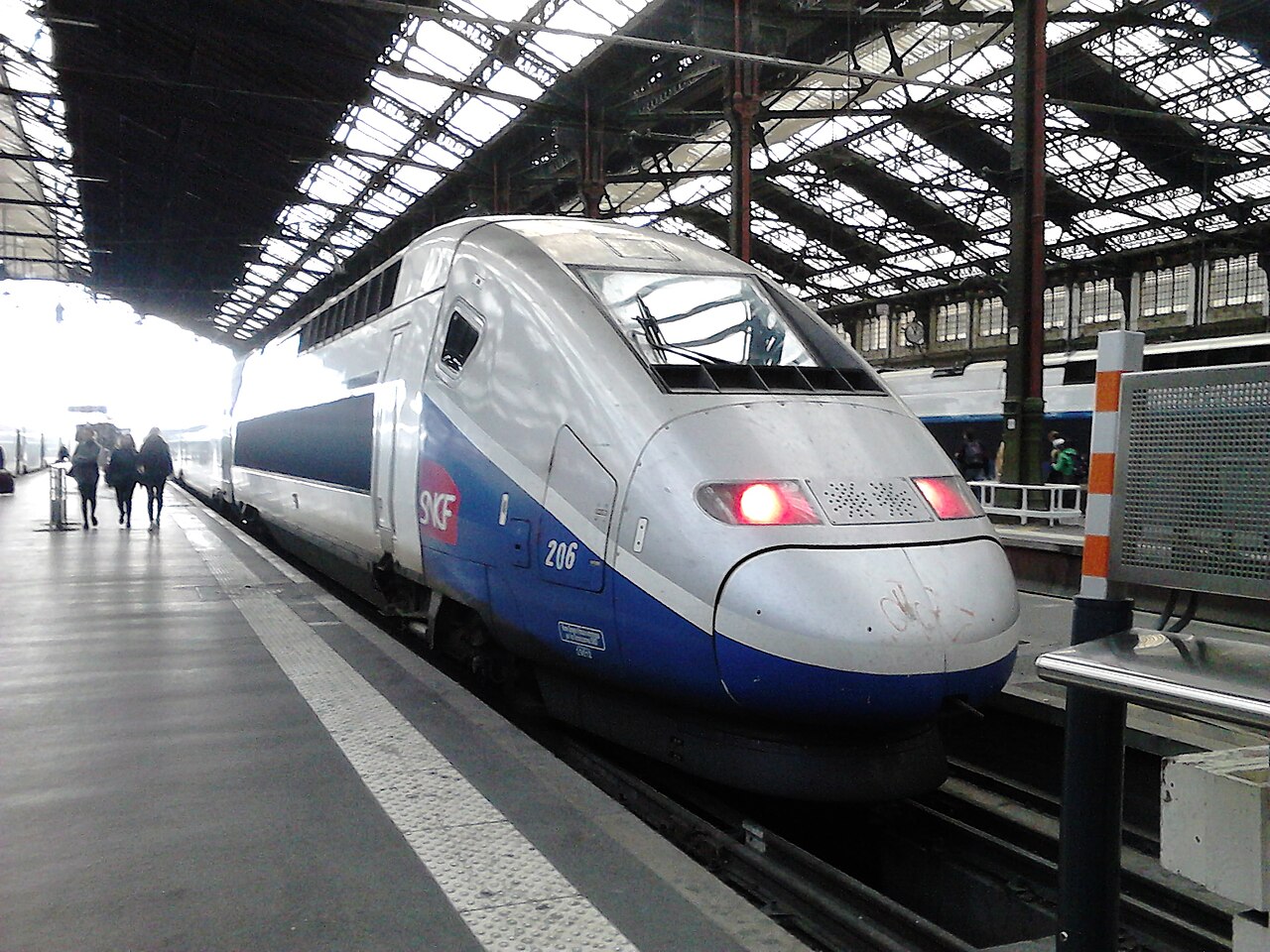
Image: Foto: Wikimedia Commons · License: cc-by-sa
TAV São Paulo-Rio: the high-speed train that Brazil insists on not getting off the drawing board
TAV São Paulo-Rio: the high-speed train that Brazil insists on not getting off the drawing board
Main source: Brasil e China firmam parceria que prevê ferrovia ligando Atlântico e Pacífico | G1, Brasil tenta, de novo, expandir as ferrovias. Mas ainda falta combinar com os chineses, Projetos de trens de passageiros avançam no Brasil, mas ainda enfrentam desafios - Revista Ferroviária · By The Rail Post Desk
The most ambitious project of the Brazilian railway has a Chinese investor at the table, but hits against decision-making paralysis and the billion-dollar cost that no one wants to fund
“When technique organizes space, society gains time to live.” The phrase, which could adorn any modern mobility master plan, accurately captures what is at stake in the São Paulo-Rio de Janeiro corridor — the crown jewel of any high-speed rail project in the southern hemisphere.
The Brazilian High-Speed Train, the TAV, is one of those projects that have inhabited the national imagination for decades. Connecting the country’s two largest metropolises in just over an hour and a half would mean, in practice, stitching together Brazil’s main economic axis with the technology that has already transformed mobility in Europe, Japan, and China.
The numbers are eloquent and, at the same time, frightening. The estimated investment for the TAV infrastructure is around R$ 50 billion, with another R$ 10 billion needed for expropriations and real estate development along the route, as detailed by Bernardo Figueiredo, president of TAV Brasil, the company structuring the project.
These are amounts that place the project on a scale comparable to major global infrastructure works, but they encounter an institutional environment still reticent in Brazil. The paradox is evident: there is a Chinese group willing to sit at the table and capital to be mobilized, but the political signal to turn intention into a contract is lacking.
Figueiredo himself acknowledged, in a statement to the specialized press, that talks with Chinese investors advanced until they hit the wall of the absence of governmental signaling. The foreign investor, especially the Chinese, does not operate in a vacuum — it needs institutional guarantees, a predictable regulatory framework, and a state interlocutor who demonstrates commitment to the project.
While the TAV stalls, the medium-speed São Paulo-Campinas Intercity Train has already been tendered in 2024 and advances with China’s CRRC as a partner of the winning consortium, in a R$ 14 billion contract that includes the operation of CPTM’s Line 7-Rubi. The difference between the two projects is instructive: the Campinas TIC had a Public-Private Partnership model structured by the São Paulo state government, risk sharing, and an already operational asset to anchor financial attractiveness.
The TAV, in turn, depends on a preliminary environmental license still in progress and on a financial engineering that inevitably involves BNDES and some type of state subsidy. Bernardo Figueiredo stated that the group is actively working to obtain the environmental authorizations, but the schedule remains undefined while the federal government does not define whether it will treat the project as a strategic priority or merely as a large-scale private initiative.
The National Secretary of Rail Transport, Leonardo Cezar Ribeiro, has stated that the ministry looks favorably on the initiative, but noted that it is an entirely private infrastructure, which imposes limits on official support. BNDES financing appears as the main incentive channel mentioned, but without a robust PPP model, the appetite of the Chinese investor tends to cool.
The fundamental issue is that high-speed projects rarely sustain themselves on fare revenue alone. In every country where they operate, from France to Japan, and including China, state subsidy — direct or indirect — is a structuring part of the economic equation, and Brazil has not yet decided if it is willing to assume this political and fiscal cost.
The contrast with what happens in the state of São Paulo is revealing. The São Paulo government announced more than R$ 50 billion for the expansion of the Metro and CPTM, while investing R$ 14 billion in the Campinas TIC, demonstrating that when there is political will and adequate modeling, the money appears and the rails advance.
At the federal level, the rapprochement with China in the railway area is real and recently produced a memorandum of understanding for the planning of a transoceanic railway linking Brazil to the port of Chancay in Peru, as reported by G1 last July. The gesture shows that Beijing has a strategic appetite for transportation infrastructure in South America, but the case of the TAV requires a deeper kind of commitment — it is not just about moving commodities, but about implementing a high-performance passenger transport system between two megacities.
The technical obstacles are well-known: sharing tracks with freight trains is unfeasible at high speed, which requires a new, segregated alignment, with wide curve radii, tunnels, and viaducts on a scale unprecedented in the country. The environmental licensing of a corridor that crosses the Serra do Mar and the Paraíba Valley is also not trivial and could add years to the schedule even before the first pile is driven.
Brazil has territory, population demand concentrated in the Southeast axis, and an international partner that dominates the technology and has capital to invest — CRRC is the world’s largest train manufacturer and is already preparing a factory in Araraquara, in the interior of São Paulo, with an initial investment of R$ 50 million to serve the Brazilian market starting in 2026. What is missing, therefore, is not engineering or Chinese money: it is the political decision to treat high-speed as a state project, and not as a private sector adventure.
While this decision does not come, the TAV remains the most studied and least built railway in Brazil, a monument to indecision that contrasts with the urgency of a country that needs to regain lost time on rails. Technique knows how to organize space — it remains to be seen when politics will allow society to, in fact, gain the right to live faster.