Image: Foto: Wikimedia Commons · License: cc-by-sa
Betting on rails exposes the chasm between innovation and backwardness in American corridors
Betting on rails exposes the chasm between innovation and backwardness in American corridors
Main source: Pros & Cons of Developing US High-Speed Rail, Cascadia High-Speed Rail | WSDOT, Top 6 des innovations en matière de technologie ferroviaire - KnowHow · By The Rail Post Desk
While maglev flirts with 600 km/h and hyperloop promises revolution, projects like Cascadia High-Speed Rail try to lay the foundations of modernity in a continent shaped by asphalt.
Modernity is not abstract. It has ballast, gauge, energy, and direction. In the corridors of the Cascadia megaregion, stretching from Vancouver, Canada, to Portland, United States, a high-speed rail plan attempts to break the historical inertia of a continent molded by the automobile and the airplane. The project, which received a federal appropriation of US$49.7 million in December 2024, as announced by the Washington State Department of Transportation (WSDOT), seeks more than just shortening distances: it aims to redefine the economic geography of the American Northwest.
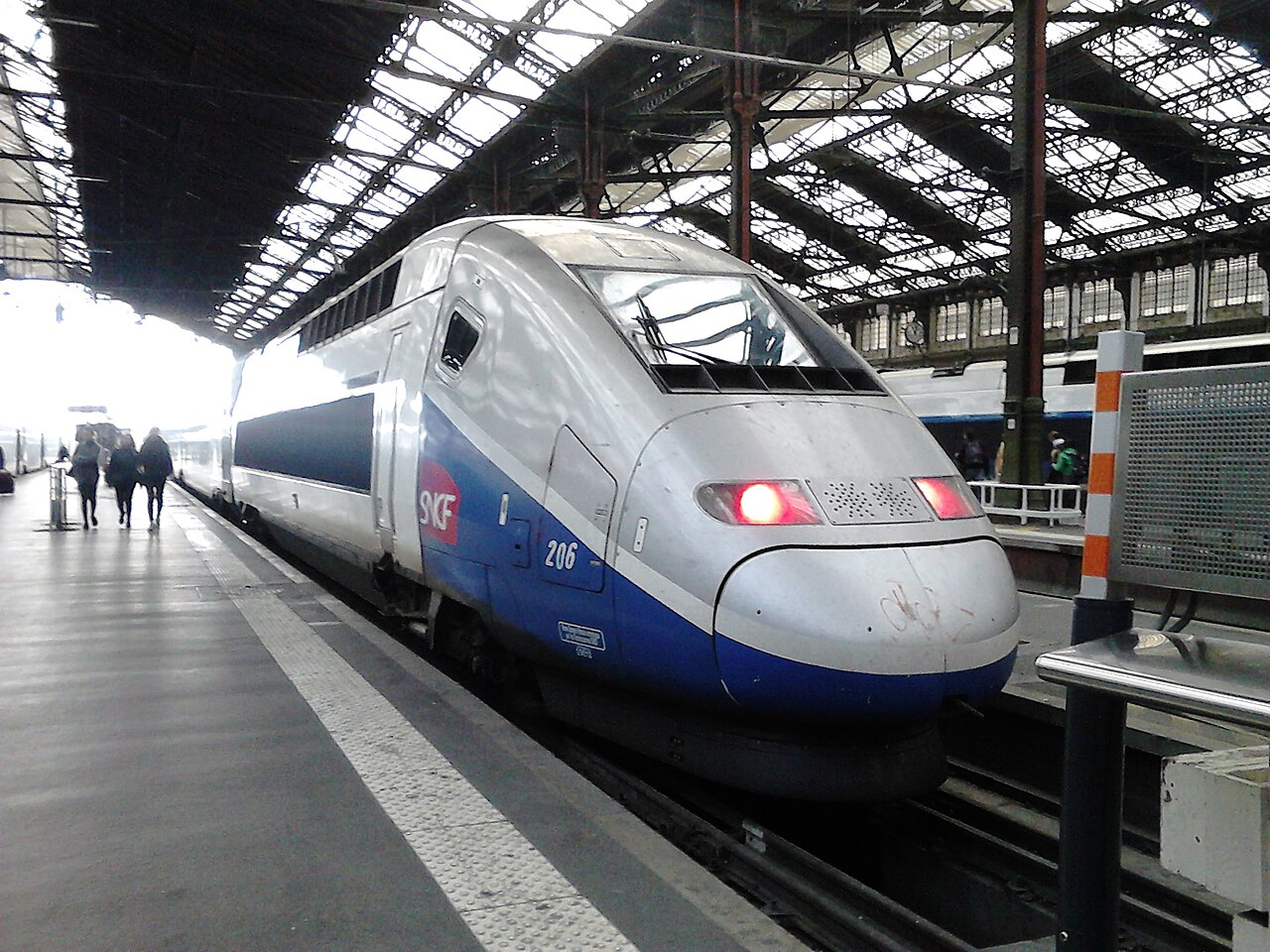
The contrast with the global vanguard is didactic and relentless. While the Japanese Shinkansen and the French Train à Grande Vitesse (TGV) have been cutting through their territories at 320 km/h for decades, the fastest service in commercial operation in the U.S., the Amtrak Acela Express, reaches peaks of only 265 km/h in the congested Northeast Corridor. The difference is not merely technological but a raw illustration of political choices and investment priorities that sacrificed the rail on the altar of asphalt and aviation kerosene.
The Cascadia High-Speed Rail emerges as an attempt to correct this course. The federal grant, made possible by the Federal Railroad Administration’s (FRA) Corridor Identification and Development Program, will fund the service development plan over the next four years. A meticulous study will assess passenger demand, route options, and the market potential of this innovation axis. The project is treated as a catalyst for a more integrated, competitive, and prosperous megaregional economy, working complementarily to, rather than replacing, the existing Amtrak Cascades service, which shares tracks with freight trains and operates at conventional speeds.
A more technical look reveals the ambition of the plan. The official WSDOT portal details that the high-speed system designed for Cascadia will operate in ranges between 260 and 400 km/h, requiring a radically different infrastructure. This means a dedicated permanent way, free from interference by freight trains and level crossings. The pantograph on the roof of the trains will draw energy from a catenary tensioned with absolute precision, powering high-power traction motors and regenerative braking systems that return electricity to the grid during deceleration.
A comparison with other American efforts is inevitable and exposes the magnitude of the economic and political challenge. In California, the high-speed project, after decades of legal battles and budget overruns, envisions trains at 355 km/h over 1,236 kilometers, connecting Los Angeles to San Francisco in about two and a half hours. The difference in scale and ambition between what is planned and what exists is symbolized by the fact that the Amtrak Acela, the “pride” of current American speed, uses tilting trains to negotiate curves inherited from the 19th century. An ingenious yet limiting adaptation that does not compare to the freedom of a new, straight alignment.
While the United States struggles between will and land bureaucracy, the frontier of high-speed technology has already shifted to another level. Magnetic levitation technology, or maglev, eliminates contact friction by making the train float about 10 centimeters above the rails, using electromagnets with superconducting properties cooled to extreme temperatures of -267.8°C. The absolute world record of 603 km/h, set by a Japanese maglev, demonstrates that the 600 km/h barrier is not insurmountable for land transport. However, the cost of dedicated infrastructure and the energy voracity of cryogenics remain formidable obstacles to its massification.
An even more radical and speculative bet lies in the hyperloop concept, popularized by Elon Musk. The promise of propelling capsules at up to 1,100 km/h inside very low-pressure tubes, nearly eliminating aerodynamic drag, would transform the geography of entire continents. However, the engineering complexities, such as maintaining a vacuum over hundreds of kilometers and the thermal expansion of the tubes, relegate this vision to a horizon of at least a decade of testing. The global market, projected to be worth US$6.6 billion in 2026, still lacks a single operational kilometer in commercial service.
For the promise of high speed to materialize, from the robustness of a conventional TAV to the audacity of a hyperloop, safety and operational efficiency depend on a layer of digital intelligence that is rapidly evolving. Systems like ATO (Automatic Train Operation) automate driving, controlling acceleration and braking with surgical precision, optimizing energy consumption and reducing headways between trains. In parallel, Positive Train Control (PTC) acts as a safety net that, via GPS and digital communication, monitors the speed and location of each train in real time, intervening automatically to prevent collisions or derailments due to overspeed on critical curves.
The obsession with speed, however, is not a technological whim. It carries an environmental imperative that expert infrastructure analysis quantifies bluntly: a passenger on a domestic flight in the U.S. emits about 133g of CO₂ per trip, while a high-speed train like the Eurostar emits only 6g. The electrification of railway corridors, powered by an increasingly cleaner energy matrix, represents the most viable route to decarbonize medium-distance intercity mobility, a feat that electric cars will not be able to replicate alone in congested corridors.
For nations still debating the alignment of their first dedicated passenger line, like Brazil, American lessons hold profound strategic value. The evidence that every US$1 billion invested in high-speed generates 24,000 direct and indirect jobs, ranging from heavy civil construction to precision engineering, dismantles the false dilemma between social development and mobility modernization, as demonstrated by Europe’s HS2 works. What the California saga and Cascadia planning teach is that the window of opportunity does not close so much due to a lack of technology, but because of the difficulty in aligning political will, environmental permitting, and a funding model that escapes budgetary paralysis.
The global scenario, therefore, exposes an asymmetrical race where backwardness is not in knowledge but in execution. While maglev rewrites the concept of friction in Japanese laboratories and hyperloop struggles to leave the drawing boards of California, the effort to lay sleepers and stretch catenaries in the 21st century, as seen in the Cascadia corridor, is a reminder that true innovation is not just in the final speed. It lies in the capacity to convert century-old planning into steel, cement, and gauge—an asset of sovereignty that Brazil, with its coastal population density, still needs to learn to claim.
Signature: Editorial Staff