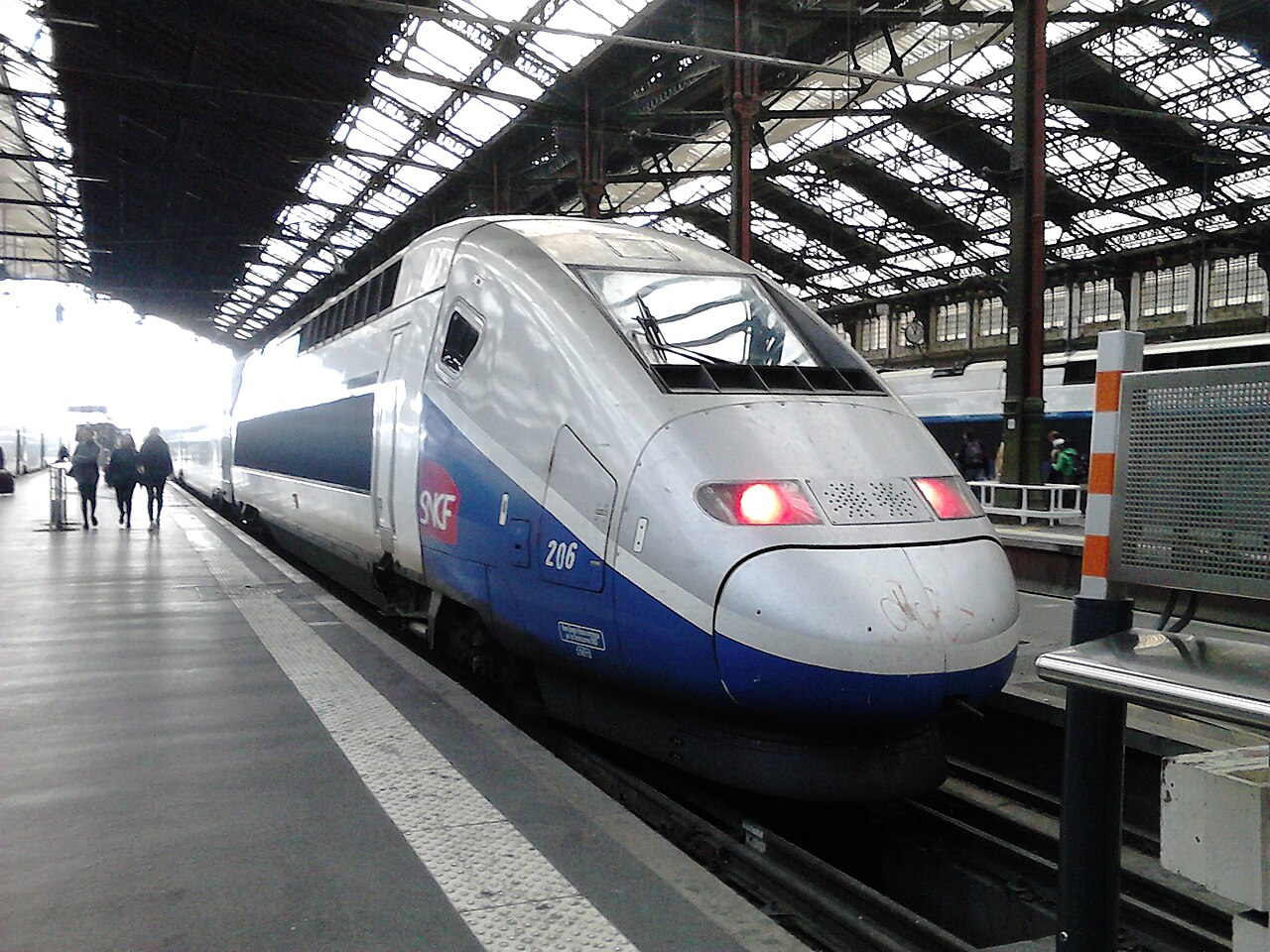
Image: Foto: Wikimedia Commons · License: cc-by-sa
China breaks the 450 km/h barrier and rewrites the geography of development on rails
China breaks the 450 km/h barrier and rewrites the geography of development on rails
Main source: Cascadia High-Speed Rail | WSDOT, Top 6 des innovations en matière de technologie ferroviaire - KnowHow, Kalifornien will eine Hochgeschwindigkeitszug-Strecke bauen - DER SPIEGEL · By The Rail Post Desk
The CR450 is not just a speed record, but the materialization of a power project that connects populations, reduces distances and exports an engineering model that challenges traditional powers.
In less than two decades, China created the largest and most advanced high-speed railway system in the world. The observation, made by the president of the International Union of Railways (UIC), Alan Beroud, during the 12th World Congress of High-Speed Railways in Beijing, reflects the reality of the numbers and engineering applied on a continental scale.
The Chinese high-speed network already extends for about 48 thousand kilometers, connecting almost all cities with more than 500 thousand inhabitants. This feat is a historical anomaly that no other nation has been able to replicate, transforming the train into a tool of territorial cohesion and accelerated economic development.
The jewel in the crown of this expansion goes by the name of CR450 Fuxing, the prototype that broke the 450 km/h barrier in tests and is consolidating itself as the fastest high-speed train on the planet. While the Western world still debates the financial viability of railway projects, China already commercially operates the CR400 Fuxing at a cruising speed of 350 km/h.
The engineering behind this machine reveals a meticulous technological leap. High-speed bogies with aerodynamic fairings drastically reduce air resistance. Single-arm pantographs maintain stable contact with the overhead catenary even under extreme stress. A CTCS-3 signaling system manages traffic flow with digital precision. These solutions eliminate the physical and bureaucratic friction that paralyzes projects in the rest of the world.
According to the specialized sector coverage, the impact of this technology has already spilled over Chinese borders. The Jakarta-Bandung railway in Indonesia, built to Chinese standards, compressed a journey of more than three hours to a mere 46 minutes, redefining mobility logistics in Southeast Asia.
The same script of spatial transformation was repeated on the Hungary-Serbia railway, where the route between Budapest and Belgrade was shortened from eight hours to just three. The China-Laos railway, a central piece of the Belt and Road Initiative, transported an impressive 52.7 million passengers and 59.4 million tons of cargo by May 2025, injecting economic vitality into a previously isolated country.
The combination of magnetic levitation (maglev) with conventional high-speed technologies places the Chinese railway industry on a plateau of permanent experimentation. Meanwhile, projects like the one in California have been slipping for decades between cost explosions and legal battles with local farmers, showing that a train’s speed also depends on the decision-making speed of the state that builds it.
For Brazil, the Chinese experience should sound like an energetic warning and not like a distant curiosity from international news. The country that has been discussing for years an Intercity Train (TIC) between São Paulo and Campinas — a modest route compared to the Asian leaps — needs to understand that high speed is not a luxury of rich countries, but an instrument of development and logistical competitiveness.
The integration of metropolitan regions by rapid rails challenges the monopoly of regional air transport and the predatory road-centric model that consumes Brazilian infrastructure. The logic of the CR450, based on energy efficiency, reduction of travel times and induction of economic growth along the route, is perfectly adaptable to densely populated corridors such as the Rio-São Paulo axis or Brasília-Goiânia.
The rise of the Chinese model proves that rail transport at the technological forefront is a political and civilizational decision before being a mere operational cost spreadsheet calculation. Mastering the catenary, aerodynamic bogies and digital signaling is to master the future of mobility.
While Western powers get entangled in endless ideological discussions about the role of the state, China delivers a 450 km/h machine that brings regions closer and reconfigures the global economic map. The silence of high-speed rails is the most deafening sound of contemporary technical progress.