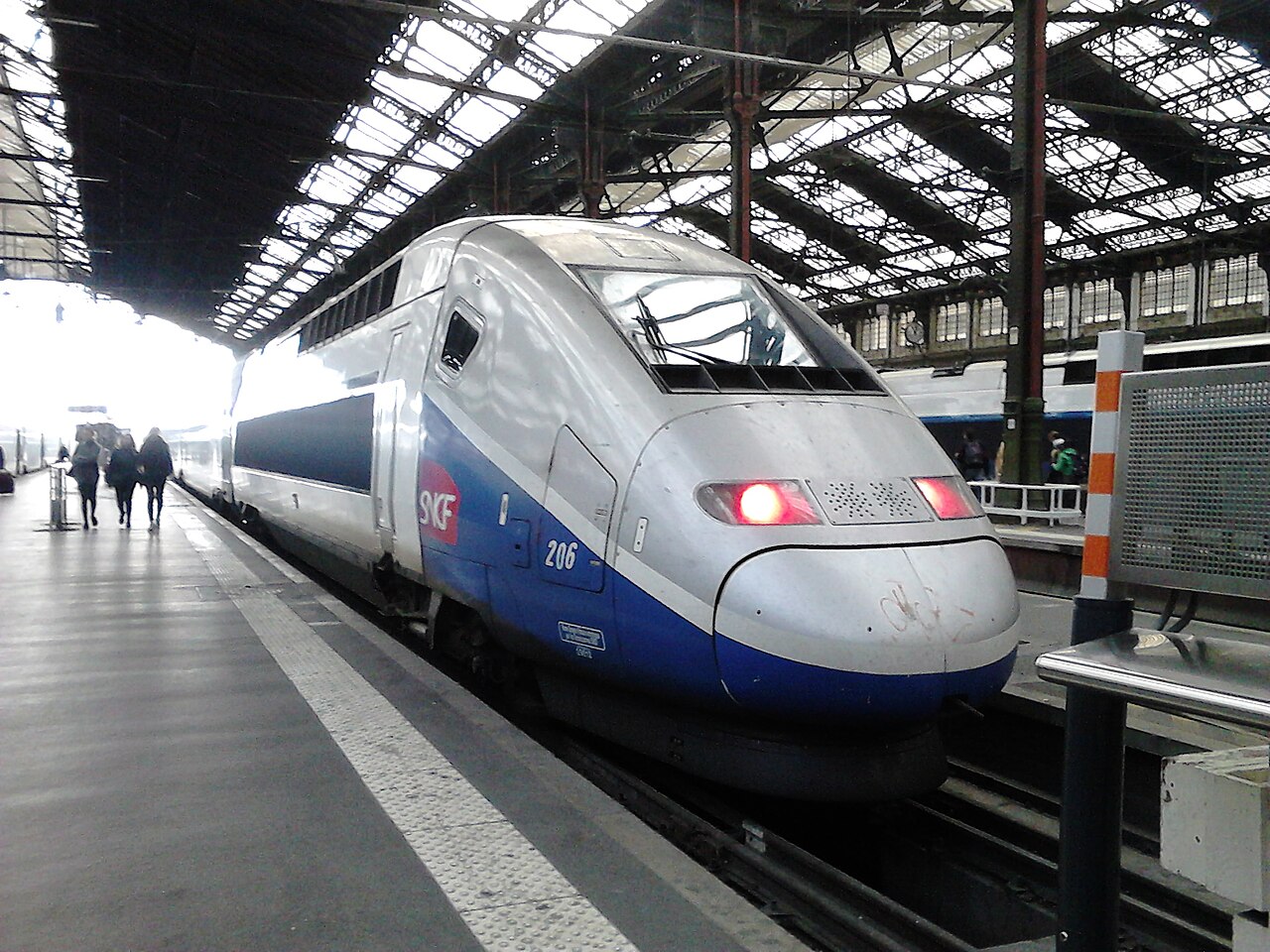
Image: Foto: Wikimedia Commons · License: cc-by-sa
Chinese underwater train defies geology and exposes the myopia that stalls high-speed rail in Brazil
Chinese underwater train defies geology and exposes the myopia that stalls high-speed rail in Brazil
Main source: Após duas décadas, TAV transporta 66% dos passageiros a 250 km/h | Revista O Empreiteiro, Teststrecke für High-Speed-Internet im Zug eröffnet, Kalifornien will eine Hochgeschwindigkeitszug-Strecke bauen - DER SPIEGEL · By The Rail Post Desk
The engineering of underwater megaprojects defines a new geopolitical and logistical chessboard, while Brazil skates on railway promises that never leave the drawing board. When technique organizes space, society gains time to live. This maxim, which seems utopian to those facing chronic congestion in Brazilian metropolises, materializes in brutally concrete form in Northeast Asia, where China is moving forward to carry out one of the most radical engineering projects of the century: the Bohai Strait underwater train. The project, which foresees a 123-kilometer underwater tunnel connecting the Liaodong and Shandong peninsulas, represents much more than a geological feat. It is a vector of continental integration that, according to a report by the O Cafezinho portal, will reduce travel time between Dalian and Yantai from an exhausting six hours to just 40 minutes, compressing geography and eliminating the maritime barrier that historically separates two vital economic hubs. To grasp the challenge, the project requires an estimated investment of over R$224 billion, a figure that starkly exposes the difference between a long-term state vision and the chronic budgetary paralysis that condemns projects like the Campinas-São Paulo-Rio High-Speed Train (TAV) to limbo. The technical configuration of the tunnel is tripartite and absolutely ingenious: two parallel spans will be dedicated exclusively to train traffic, while a central span will function as an artery for maintenance and safety. This triple structure resolves a classic logistical bottleneck in submerged megaprojects, allowing technical interventions without interrupting the flow of trains. The estimated construction period is 10 to 15 years, a time horizon that contrasts sharply with Brazil’s short-term political culture, where high-speed tenders are announced as electoral factoids without a single kilometer of dedicated track being laid. Chinese engineers face geological adversities that would make any Western designer hesitate. The Bohai Strait region is subject to intense seismic activity and high underwater pressure, requiring state-of-the-art ventilation and waterproofing systems, as well as rigorous cooling protocols to ensure infrastructure stability over decades of operation. The 123 km length of the Chinese tunnel easily surpasses the 50 km of the Channel Tunnel, a European icon that, like the German Intercity-Express (ICE) network, demonstrated that high-speed rail traffic does not compete with airplanes but devours them on continental distances. According to the O Empreiteiro magazine, after two decades of operation, the German high-speed train (TAV) was already transporting 66% of long-distance passengers served by Deutsche Bahn, proving that consistent railway investment reorganizes a country’s mobility matrix. The technical lesson emerging from Bohai, which Brazil insists on ignoring, is that engineering does not bend to political deadlines. Professor and engineer Eberhard Jaensch, a TAV consultant and editor of the RTR Rail Technology Review magazine, recalls that the German state-owned DB officially launched its high-speed project in 1984, but its first two dedicated lines had already been under construction for ten years, an accumulated planning that the Brazilian concession model has never been able to replicate due to its obsession with the lowest initial cost. While the Asian giant develops solutions to seal tunnels against colossal pressures and train traffic at commercial speeds of 300 km/h, Brazil remains hostage to sterile debates about short-term financial viability. The German experience with the ICE 3’s regenerative electric brake, the use of concrete slab as ballast to eliminate the drag of traditional material, and the anti-pressure sealing in tunnels reveals a universe of incremental innovation that the perpetually postponed Brazilian TAV project never allowed the national engineering sector to begin mastering. The continental integration proposed by China in the Bohai Strait is not merely a project to transport passengers; it is the materialization of a power logic that understands mobility as the foundation of economic sovereignty. The contrast with the historical difficulty in making the Campinas-São Paulo-Rio axis viable, a corridor of population and economic density comparable to the best Asian scenarios, is empirical proof that producing steel, concrete, and silicon on rails requires, above all, the political decision to overcome inertia.