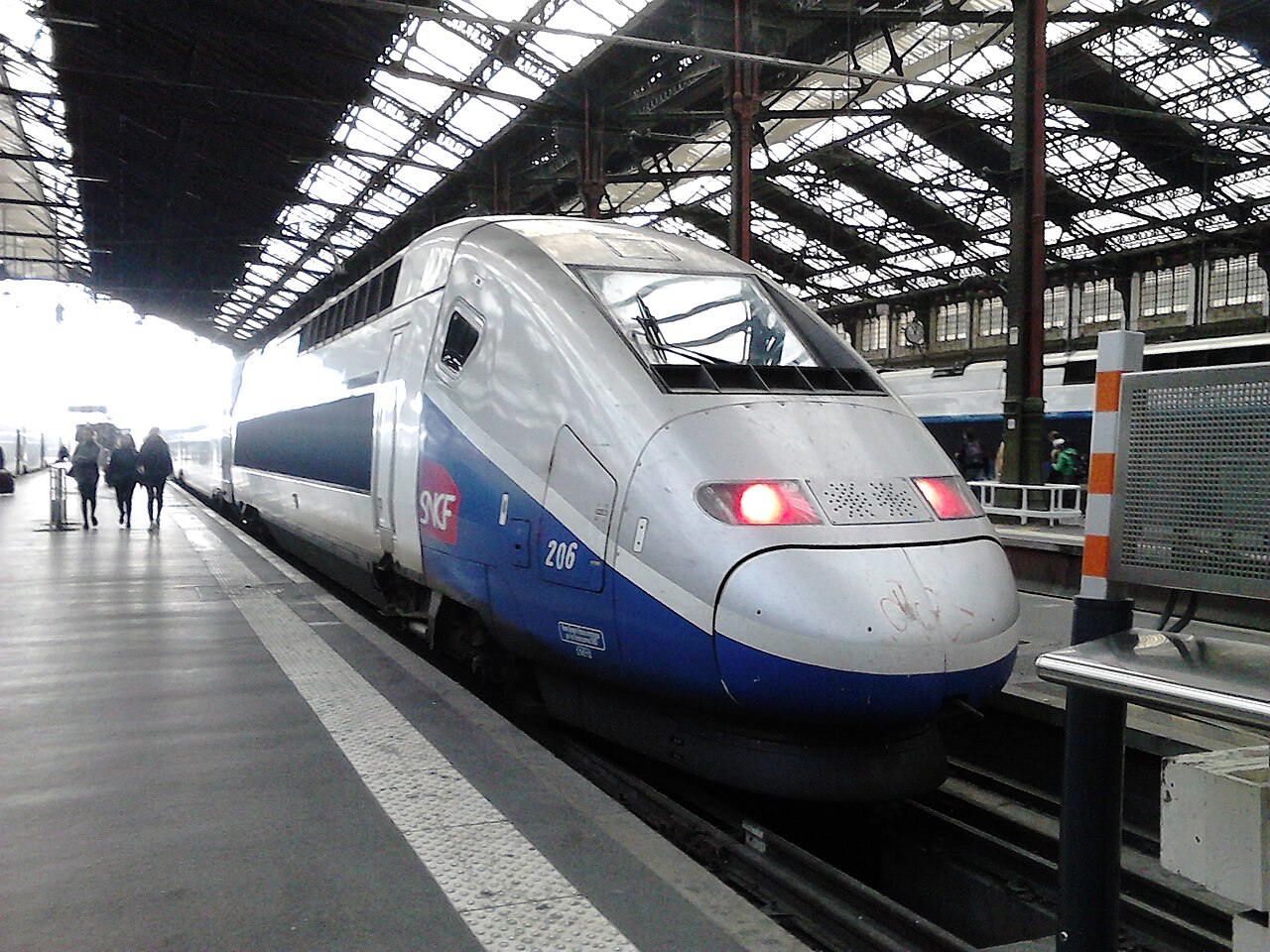
Image: Foto: Wikimedia Commons · License: cc-by-sa
High-Speed Rail Connecting Vancouver, Seattle, and Portland: The Future of Transportation in the Cascadia Megaregion
High-Speed Rail Connecting Vancouver, Seattle, and Portland: The Future of Transportation in the Cascadia Megaregion
Main source: High-speed rail, New Research Led by UIL Identifies Success Factors for High-Speed Rail Projects – Urban Infrastructure Lab, Cascadia High-Speed Rail | WSDOT · By The Rail Post Desk
Speed is a form of civilization. High-speed technology is redefining railway transportation worldwide, driving efficiency and connectivity.
Speed is also a form of civilization. This principle strongly applies to the development of high-speed rail (HSR) systems in various parts of the globe, where technical innovation and operational efficiency are at the center of the most ambitious projects. A notable example is the Cascadia High-Speed Rail project, which aims to connect Vancouver, Seattle, and Portland, offering a fast, reliable, and sustainable service.
The Cascadia High-Speed Rail project involves a partnership between Washington, Oregon, and British Columbia, demonstrating a collaborative approach to the development of critical infrastructure. The Washington government has allocated $150 million for planning the high-speed connection, a significant investment that reflects the strategic importance of this project for the region. According to WSDOT, the project aims to create a high-speed corridor capable of reaching speeds between 160 to 250 miles per hour, providing quick and efficient travel.
Aecom, a global leader in transportation projects, plays a crucial role in this endeavor. With over 50 high-speed projects designed and delivered, and a team of more than 50 high-speed specialists worldwide, Aecom brings a wealth of experience and technical expertise. The company has led the transportation ranking by Engineering News-Record for over 20 years, solidifying its position as a benchmark in the field.
Technological innovations are fundamental to the success of high-speed projects. Technologies such as maglev, which uses magnetic levitation to eliminate friction, and Hyperloop, which proposes travel in low-pressure tubes, are revolutionizing the way we think about rail transportation. Although still in the testing phase, these technologies promise incredibly high speeds, reaching up to 375 mph for maglev and 684 mph for Hyperloop, according to KnowHow.
Additionally, advanced systems like Automatic Train Operator (ATO) and Positive Train Control (PTC) are being implemented to improve safety and operational efficiency. ATO allows trains to operate with little or no human intervention, while PTC monitors real-time conditions, automatically intervening in case of risky situations. These technologies not only increase safety but also optimize energy use and reduce pollutant gas emissions.
Integrating these technologies into projects like the Cascadia High-Speed Rail requires a multidisciplinary approach, combining engineering, urban planning, and project management. For example, Aecom adopts an integrated methodology that unites architecture, systems engineering, and construction management in a single process. This ensures that high-speed stations are designed to meet future needs, providing an exceptional passenger experience and long-term adaptability.
Research conducted by the Urban Infrastructure Lab at the University of Washington identified several success factors for high-speed projects. Among them, the prioritization of competitive and convenient services, the formation of productive partnerships with the private sector, and effective public engagement coordination stand out. These factors are crucial to ensure that projects remain aligned with economic and social development goals, as well as being financially sustainable.
Although Brazil currently does not have any ongoing high-speed projects, the lessons learned from initiatives like the Cascadia High-Speed Rail can be applied in the future. The adoption of advanced technologies and the formation of strategic partnerships can drive the development of modern and efficient transportation systems, contributing to improved quality of life and economic competitiveness.
High speed is not just about speed; it represents a profound transformation in how cities and regions connect and develop. With the continuation of innovations and the implementation of best practices, rail transportation will continue to be a central technology for development and global prosperity.