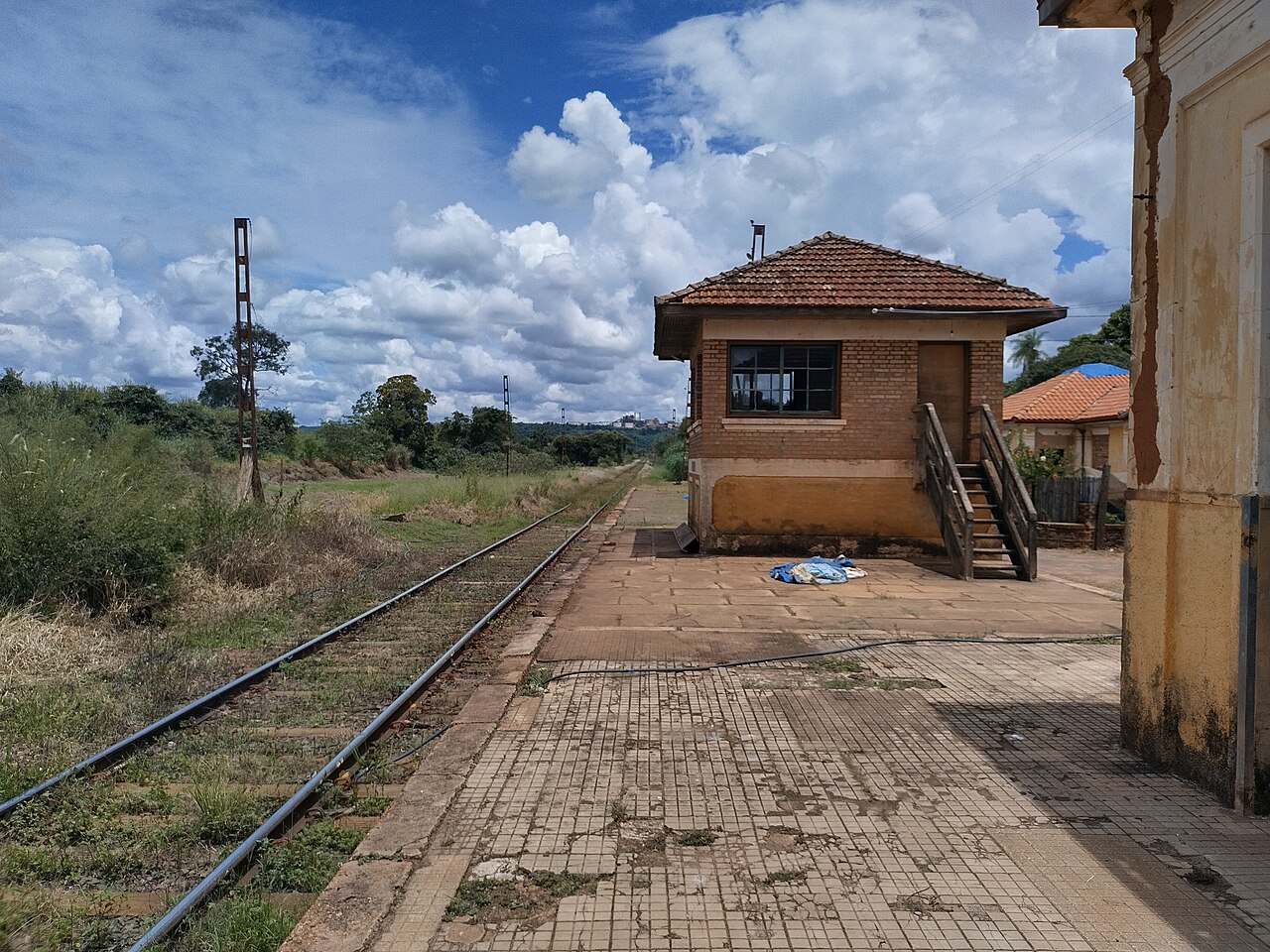
Image: Foto: Wikimedia Commons · License: cc-by-sa
The tracks are the material geometry of the future: challenges and strategies in freight rail infrastructure
The tracks are the material geometry of the future: challenges and strategies in freight rail infrastructure
Main source: Freight Rail Infrastructure Market | Global Industry Analysis & Outlook - 2036, Freight Rail Investments | Growing America, Funding the Future of Rail: Innovative Tools and Partnerships Driving Rail Development — Regional Infrastructure Accelerator · By The Rail Post Desk
Freight rail infrastructure is a vital system, driven by technical decisions, ownership models, and strategic trade-offs. With the global market valued at USD 42.0 billion in 2025 and projected to reach USD 64.5 billion in 2036, with a CAGR of 4.0%, energy efficiency and logistical resilience are at the center of discussions.
The tracks are the material geometry of the future. This phrase captures the essence of freight rail infrastructure, which goes beyond mere tracks and steel, forming a complex network of technical decisions, ownership models, and strategic trade-offs. The global freight rail infrastructure market was valued at USD 42.0 billion in 2025 and is projected to reach USD 64.5 billion in 2036, with a compound annual growth rate (CAGR) of 4.0%. However, this number conceals silent engineering conflicts that define efficiency and logistical resilience.
Brazil leads Latin America with a CAGR of 4.8% until 2036, driven by the expansion of the Carajás Railway (BRL 12 billion), the North-South axis, and the Ferrogrão. Despite this, environmental litigation risks still represent a significant obstacle. Fixed track infrastructure includes rail networks, civil structures (bridges/tunnels), electrification systems, signaling, and intermodal terminals, excluding rolling stock (locomotives/wagons).
In North America, private operators such as Union Pacific and BNSF invest approximately USD 23-25 billion annually from their own capital in the maintenance and modernization of 140,000 miles of track, six times more than the North American industrial average in relation to revenue. This separate ownership model, where infrastructure and operations are managed by different entities, allows for greater flexibility and operational efficiency.
India operates the Western Dedicated Freight Corridor (Western DFC), a greenfield project that has reduced travel time between New Delhi and Mumbai from 60-70 to 40-45 hours, the result of a green investment of USD 17 billion. This dedicated freight corridor illustrates the importance of greenfield projects, which allow for the construction of optimized infrastructure for heavy loads and automated operations, without the geometric limitations of existing lines.
In Brazil, the expansion of the Carajás Railway and the development of the North-South axis and the Ferrogrão face similar challenges. Overhead electrification, ETCS signaling, and automated intermodal terminals are critical elements for the modernization of these lines. However, the choice between electrification and diesel, between the modernization of existing lines and the construction of green corridors, requires a careful analysis of strategic trade-offs.
For example, railway electrification reduces operating costs and emissions but requires a significant initial investment in overhead lines and substations. In contrast, maintaining diesel fleets may be more economical in the short term but does not align with decarbonization goals. The decision to electrify or maintain a diesel fleet depends on a rigorous assessment of long-term benefits and initial costs.
Furthermore, the implementation of ETCS signaling and automated intermodal terminals increases capacity and efficiency but also demands substantial investments. Adding advanced technologies, such as ETCS signaling, improves safety and traffic capacity, while automated intermodal terminals accelerate cargo transfer, reducing waiting times and improving supply chain fluidity.
The separate ownership model, adopted in countries like France and the United Kingdom, allows infrastructure management and train operations to be carried out by distinct entities, facilitating competition and innovation. In Brazil, adopting a similar model could promote greater efficiency and transparency, allowing different operators to use the same infrastructure, generating economies of scale and improving service quality.
Freight rail infrastructure is, therefore, a dynamic and multifaceted system that requires an integrated and strategic approach. The choices between electrification and diesel, between the modernization of existing lines and the construction of green corridors, and between energy efficiency and logistical resilience, are crucial decisions that will determine the success and sustainability of the sector. As the global market continues to grow, the ability to make informed and strategic decisions will be essential to transform projections into real operational kilometers.
According to Fact.MR, the global freight rail infrastructure market is constantly evolving, driven by factors such as emission reduction, cost optimization, and the need to strengthen supply chain resilience. Rail infrastructure, with its advantages of energy efficiency and lower environmental impact, continues to be a priority for governments and operators worldwide.
The combination of public and private investments, the adoption of advanced technologies, and the implementation of innovative ownership models are essential to ensure that freight rail infrastructure continues to be a driving force for economic development and sustainability. Rail infrastructure is not just about tracks and steel; it is the material geometry of the future, shaping the path for more efficient, resilient, and sustainable freight transport.