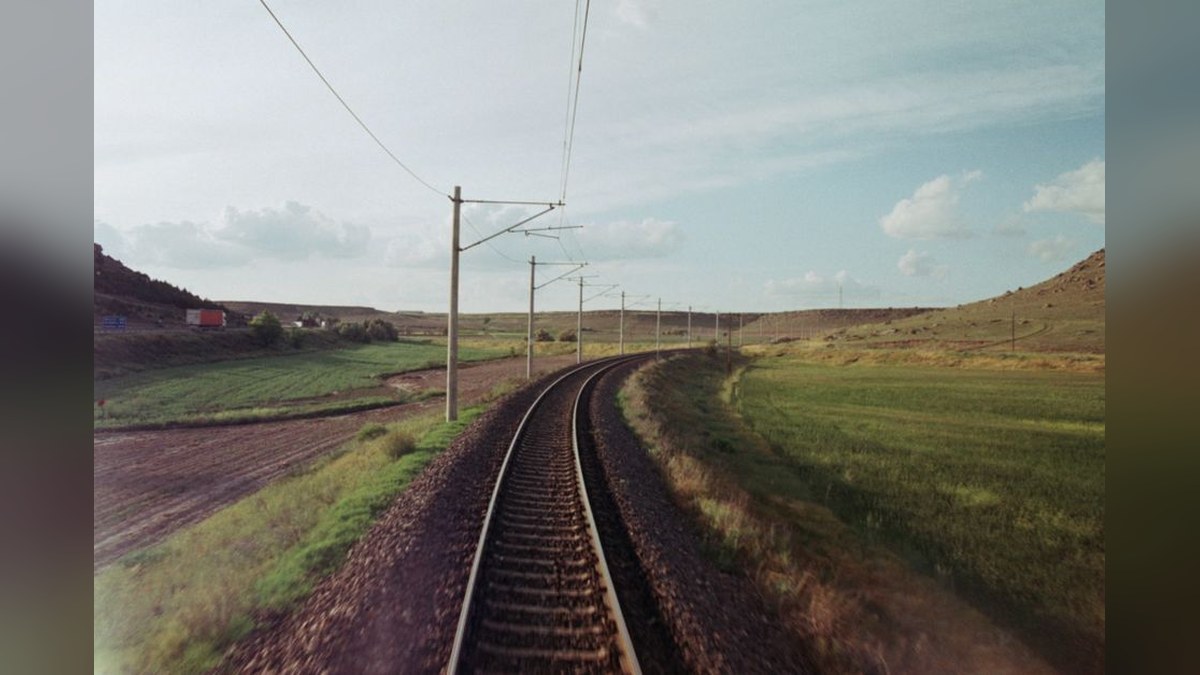
Image: Photo by Beyzaa Yurtkuran on Pexels
Spain drops double-track plan for Teruel-Sagunt freight corridor
Spain's transport ministry abandons double-tracking the Teruel-Sagunt line, sparking criticism from Aragón's regional government.
Main source: Regional leaders complain as plan to double-track key Spanish freight corridor dropped · By Rail Post Desk
The Spanish Ministry of Transport has abandoned plans to double-track the railway between Teruel and Sagunt along the Mediterranean Corridor, concluding that the additional capacity would not justify the cost, according to railwaygazette.com.
The decision has drawn sharp criticism from Aragón’s regional government, which warned it would create a bottleneck on the route to the port of València. A regional official called the move a ‘historic error’.
The ministry has formally endorsed retaining a single-track 1 668 mm gauge railway between Teruel and Sagunt, opening a public consultation after ruling out a double-track alternative that had been under consideration.
The section forms the southern part of the Zaragoza – Teruel – Sagunt cross-country axis, linking the Zaragoza-Plaza and Platea logistics hubs with Mediterranean coast ports. Zaragoza, one of the Iberian Peninsula’s industrial heartlands, sits at the intersection of routes toward the Cantabrian coast, the Atlantic, Madrid, the Mediterranean and the French border.
Ruling out a second track south of Teruel would leave freight and passenger trains competing for capacity on Aragón’s main rail link to the Valèncian ports.
The ministry’s latest study concluded that forecast passenger demand did not justify a double-track railway. It stated: ‘Given the low volume of passenger rail services, the most appropriate design is considered to be the single-track configuration, with the necessary crossing points along the section to enable the joint operation of passenger and freight services.’
The only double-track proposal, Alternative E, envisaged an entirely new 300 km/h alignment and was estimated to require investment of more than €3.7bn excluding VAT. The study concluded that the additional passenger demand would be insufficient to justify the cost and removed the option from further assessment.
Aragón’s government accused the ministry of downgrading the corridor at its gateway to the port of València and said it would formally challenge the scheme. It said the choice showed a ‘lack of ambition and commitment’, calling it a ‘historic error’.
The regional government is demanding instead that the section be developed as an electrified, double-track, high-performance railway, reviving the most ambitious option considered in the study. It noted that the route had already been identified as a high-performance section in 2004, while the rest of the Mediterranean Corridor is planned as an electrified double-track route.
‘The section is the connection of the entire corridor to Spain’s main port for freight traffic’, said David Sánchez Fraile, Aragón’s portfolio holder for transport. He warned that retaining a single track ‘creates an unjustified bottleneck on a strategic rail axis’ for national and international transport.
‘What the ministry is presenting to us today is a historic mistake, because in 2004 this route was conceived as a high-performance corridor. We still have time to correct it and we are going to work to make sure that happens’, insisted Fraile. ‘We cannot allow Aragón to be left behind by a decision we don’t understand.’