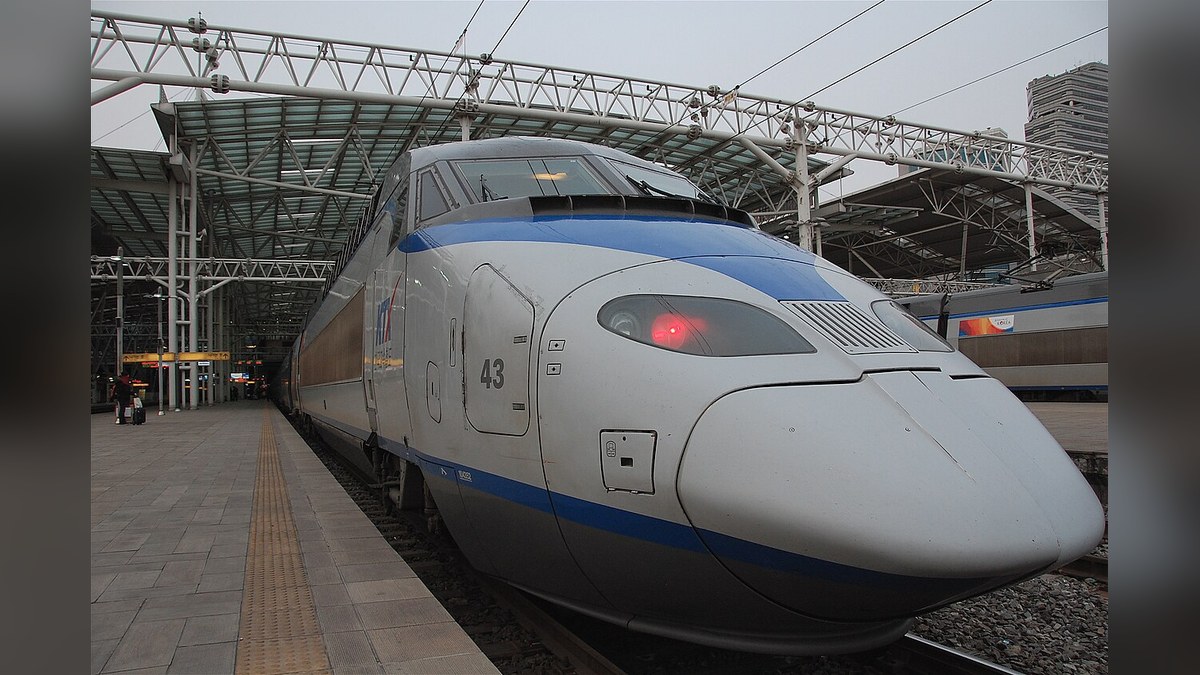
Image: Wikimedia Commons (CC BY 2.0) — LWYang
South Korea's High Speed Rail Network Addresses Capacity Shortfalls
Strategies include a merger of operators, infrastructure expansion, and new train procurement.
Main source: High Speed: South Korea tackles a capacity shortfall · By Rail Post Desk
South Korea’s high-speed rail network is grappling with capacity constraints, necessitating immediate and long-term solutions to accommodate surging demand. A key corridor between Pyeongtaek and Osong handles over 180,000 passengers daily, often leading to sold-out tickets well in advance, particularly on the Seoul-Busan route operated by Supreme Railways (SR).
In response, the Ministry of Land, Infrastructure & Transport announced the Dual High Speed Railway Integration Roadmap in December 2025, aiming to merge SR into the national operator Korail by the end of this year. This integration promises a 6% increase in seat capacity nationwide, enabling more off-peak services and longer 20-car trains during peak times at Suseo. The merger also aims to streamline an integrated payment and ticketing platform.
On May 15, a tangible step towards the merger was seen with the two operators beginning joint revenue services, coupling their respective trainsets to test interoperability, communications, braking, and emergency systems.
Beyond operational measures, the ministry is duplicating a section of the main north-south high-speed line between Pyeongtaek and Osong. The 46.9 km line, scheduled to open in 2028, will double the capacity from 190 to 380 trains per day in each direction, with a design speed of 400 km/h compared to the existing line’s 300 km/h. Budgeted at 3.18 trillion won, this project includes a 34 km tunnel and 6.3 km of bridges.
Addressing rolling stock constraints, Hyundai Rotem has been contracted to supply 31 EMU-320 high-speed trainsets for both operators. These second-generation EMU-320 trains, designed for a maximum speed of 320 km/h, are expected to enter service from next year. In July, Korail announced further procurement plans for 49 additional EMU-320 trainsets, estimated at 5 trillion won, to replace the first-generation KTX-I trainsets from 2033.
South Korea is also expanding its high-speed network, with a new 174.6 km line linking Gimcheon with Geoje island. This line, featuring South Korea’s first undersea rail tunnel, is estimated to cost 7.097 trillion won and promises to significantly reduce journey times. Concurrently, the Honam high-speed line’s second section is delayed, with only 50% of civil works completed by the end of 2025 despite an initial completion schedule set for December 2025.
Lastly, the country is pushing the boundaries of rail speed with the EMU-370, a trainset capable of 370 km/h, set to be delivered in 2032. Funded by a combination of national and private investments, this development signifies Korea’s commitment to high-speed rail innovation.
This article first appeared in the July 2026 issue of Railway Gazette International.