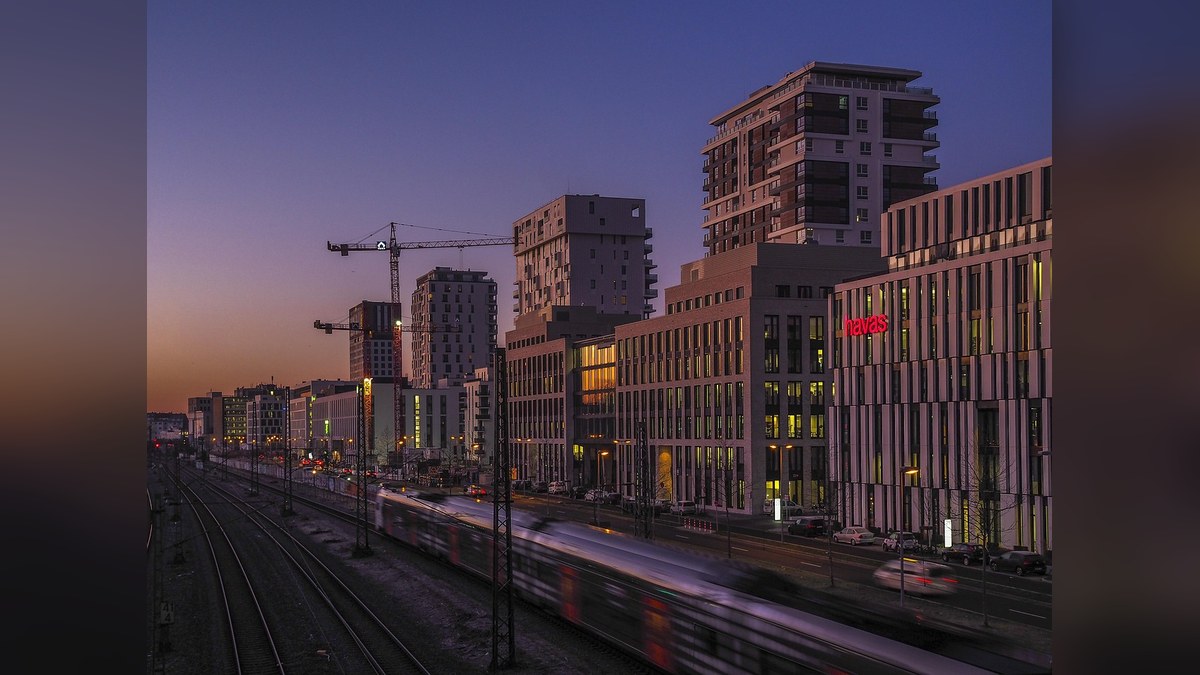
architecture, in the morning, sunrise, city, building, skyline, heaven, nature, cityscape, light, downtown, skyscraper, dawn, construction cranes, train, rail, tracks, road, metropolis, traffic
Image: Photo by 652234 on Pixabay
Orbital Metros Gain Momentum as Singapore Circle Line Completes Final Phase
Singapore's Circle Line completion highlights the growing role of orbital metros in improving urban connectivity worldwide.
Main source: Analysis: Orbital metros come of age · By Rail Post Desk
The completion of the final segment of Singapore’s Circle Line in July underscores the expanding role of orbital metros in improving urban connectivity, according to analysis and data from Railway Gazette International.
Orbital metro lines, which loop around city centres, are increasingly seen as a solution to connect suburbs and reduce pressure on congested central interchanges. The advent of full automation, known as Grade of Automation 4 (GoA4), has unlocked their potential.
Singapore joined the metro loop group on July 12 with the completion of the sixth and final phase of its Circle Line. The line now spans 37 km with 30 stations, of which 11 are interchanges. It shortens many inter-suburb journeys and provides access to previously under-served areas outside the city centre.
Next to open should be Wuhan’s Line 12, whose first phase opened on May 1. When the northern side of the loop opens later this year, Line 12 will be just shy of 60 km long, making it the world’s longest – just ahead of Delhi’s Pink Line (58.6 km, completed on March 8 2026) and Beijing’s 57 km Line 10, opened in 2013. Beijing’s Line 10 is the city’s second loop, augmenting the 28 km Line 2 opened in 1987.
Two cities are working on major orbital metro schemes. In 2020, the first 15 km of Taipei’s Yellow Line opened, with the full 49 km circle due to be completed by 2023. Planned to open in 2030, the longest loop by far is under construction in Paris. Grand Paris Express Line 15 will run for 75 km, its 30 stations connecting suburbs currently only served by main line suburban rail and RER routes.
While orbital metros provide helpful connectivity as a city’s metro network grows, they have often suffered from poor service reliability. A minor delay to one train can result in a build-up of passengers at subsequent stations, lengthening dwell times and causing service bunching. Solutions have included breaking the loop, such as in London where journeys around the northwest part of the Circle Line require a change of train, or in Oslo where Line 5 operates between two branches, with each service completing two passes of the central section and one of the rest of the loop.
Modernisation of legacy loops is a priority for operators. A good example is Madrid’s Line 6, completed in 1995 and now being modernised with new trains, platform screen doors, and the objective of eventual full automation of this heavily-used route.
As cities continue to expand their metro networks, orbital lines are proving to be a valuable tool for enhancing connectivity and reducing congestion. The data from Railway Gazette International confirms this growing trend, with more cities expected to join the loop in the coming years.