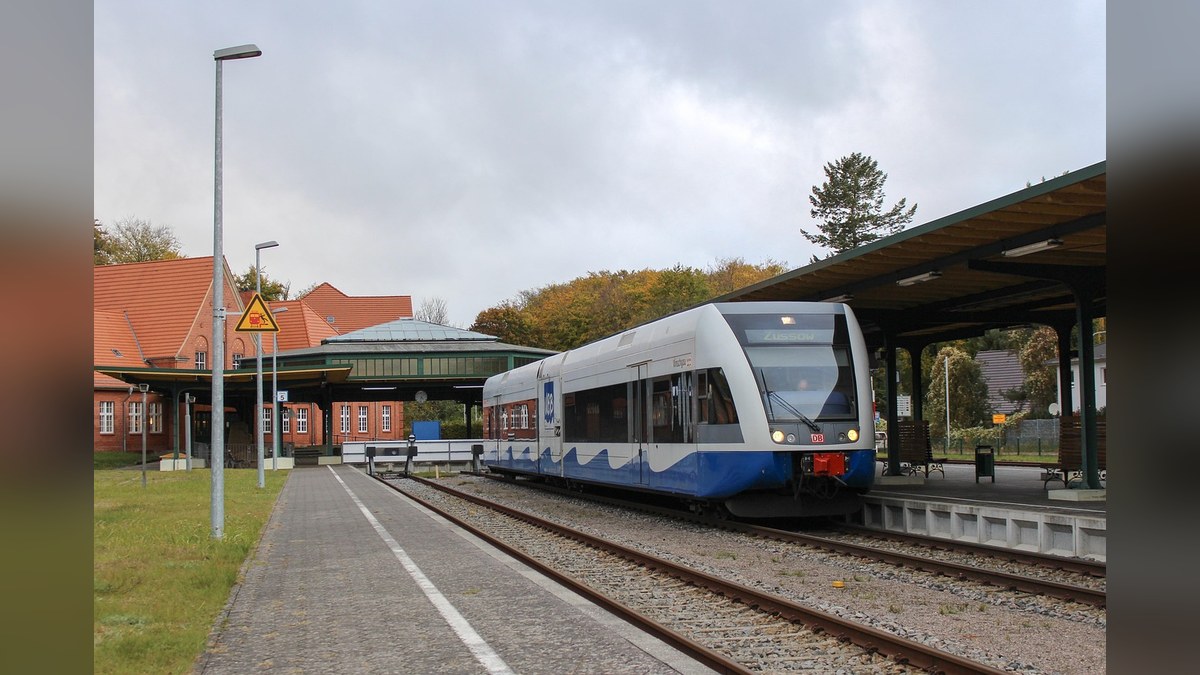
usedomer bäderbahn, dbag, deutsche bahn, usedom, heringsdorf, br646, stadler, stadler gtw, transport, multiple unit, regional train, regional transport, passenger traffic, railroad, diesel multiple unit, mecklenburg west
Image: Photo by jonasreichard on Pixabay
Benex wins Mainfranken rail contract with flexible risk model
Benex Regionalverkehr wins Mainfranken regional rail contract from 2030, with gross cost start-up phase and ETCS-equipped new trains.
Main source: Benex wins Mainfranken regional passenger operating contract under flexible risk allocation model · By Rail Post Desk
German regional rail operator Benex Regionalverkehr has been awarded both lots of the Mainfranken regional passenger operating contract, following the rejection of a legal challenge by incumbent DB Regio. The contract was confirmed on July 16 by Bayern railway authority BEG and Rhein-Main transport body RMV.
Benex already operates two sets of local passenger services in Bayern under the Agilis brand. Under the Mainfranken contract, which runs from December 2030 to December 2042, it will deliver 7.2 million train-km per year on routes around Würzburg using new rolling stock.
The deal was finalised in July, after the public procurement regulator for southern Bayern rejected DB Regio’s legal challenge lodged in October 2025. According to railwaygazette.com, the Land’s Transport Minister and BEG Supervisory Board Chairman Christian Bernreiter commented: ‘Benex submitted the best offer in terms of price and quality. This will give local public transport around Würzburg a new look. I am sure that Benex will make the first regional S-Bahn in northern Bayern a success.’
The routes covered by the tendering process carry various services radiating from Würzburg, some of which extend into Hesse, which is RMV’s area of responsibility. The package includes services RE10 (Würzburg – Neustadt (Aisch) – Nürnberg), RE54 (Frankfurt-am-Main – Würzburg – Schweinfurt – Bamberg), and RE55 which links Frankfurt with Würzburg.
Also covered are various local services around Würzburg, which are to be rebranded as a regional S-Bahn network when the new contract starts. BEG says the Regio S-Bahn Mainfranken will be the second such dedicated local passenger network to be created in Bayern, after the Regio S-Bahn Donau-Iller.
In the tendering process, BEG specified that either new or existing trains could be used, but these needed to be fitted with ETCS. Benex has confirmed its intention to procure new rolling stock, but no further details have been released to date.
The Bayern railway authority also confirmed that, due to what it termed ‘current uncertainties’ related to the future funding model for the Deutschlandticket and changes to the structure of various local transport bodies, the net-cost contract has been modified to include a gross cost start-up phase.
This gross cost phase will see BEG bear the revenue risk for at least two years following the start of operations. After this, the risk would transfer to the operator under a conventional net cost model. However, a break clause will give the operator an option to end the agreement and walk away at that point.
‘A switch from the gross to the net phase is at the discretion of BEG, provided that stable conditions exist for determining and maintaining the new revenue level’, the authority explained. ‘If this is not guaranteed, the gross phase can be extended.’
The flexible risk allocation model is designed to address uncertainties in the regional transport funding landscape, particularly around the Deutschlandticket. By allowing BEG to bear revenue risk initially, the contract aims to provide stability during the start-up phase while preserving long-term efficiency incentives.
Benex’s win marks a significant shift in the regional rail market, as it displaces the incumbent operator on a major network. The new contract is expected to bring modernised rolling stock and improved service quality to the Würzburg region.
The Regio S-Bahn Mainfranken will be the second such network in Bayern, following the Regio S-Bahn Donau-Iller. This new branding is intended to signal a higher level of service and integration for local rail passengers.
Further details on the rolling stock procurement are expected in the coming months. The contract’s start in December 2030 gives Benex ample time to prepare the new fleet and operational plans.
The award process has been closely watched by the industry, as it demonstrates the application of flexible risk-sharing models in German regional rail tendering. This approach may serve as a template for future contracts in other regions.
For now, Benex is set to take over operations in 2030, with the first regional S-Bahn in northern Bayern poised to become a reality under its stewardship.