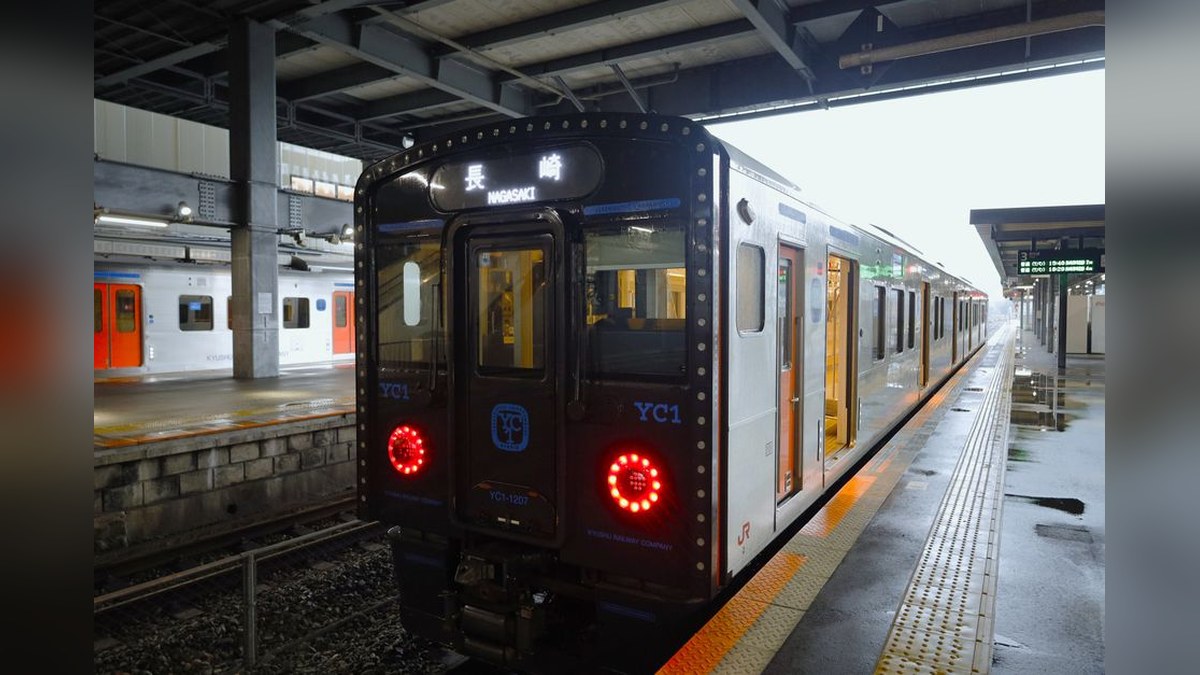
Japan targets carbon-neutral rail by 2050 with hydrogen and battery fleets
Image: Photo by Glen Zi 加侖子 on Pexels
Japan targets carbon-neutral rail by 2050 with hydrogen and battery fleets
Japan's rail decarbonisation plan: hydrogen and battery trains to replace diesel on non-electrified lines by 2035.
Main source: Japan: Decarbonisation is key to rail’s green transformation · By Rail Post Desk
Japan has set a national goal to make its entire railway sector carbon neutral by 2050, according to a report from the Ministry of Land, Infrastructure, Transport and Tourism issued in September 2025. The report, produced by the Public-Private Study Group on Green Transformation in the Railway Sector, makes decarbonisation of rail operations an explicit objective and outlines key pillars for cutting CO₂ emissions from energy use.
For electrified sections, the strategy focuses on establishing renewable energy as the primary power source, improving the energy efficiency of rolling stock and power facilities, and optimising the supply-demand balance. For non-electrified sections, the plan calls for replacing diesel vehicles with decarbonised alternatives such as hydrogen or battery electric multiple units, as well as hybrid diesel multiple units running on biofuel.
More than 30 percent of all railway lines in Japan by route length are not electrified, so the introduction of decarbonised rolling stock by around 2035 is considered essential. Alongside technical developments, work has been done on a revised regulatory framework to facilitate the widespread deployment of such vehicles.
The report stresses that any evaluation of carbon impact must be conducted on a well-to-wheel basis. While electric multiple units do not create direct emissions at the vehicle level, CO₂ is emitted at power plants during electricity generation, and this also applies to electricity used to power battery electric multiple units. Similarly, the production of hydrogen for hydrogen multiple units can result in CO₂ emissions.
When hydrogen for hydrogen multiple units is produced using renewable energy, known as green hydrogen, total CO₂ emissions are around one-quarter of those of electric multiple units using the current power generation mix and about one-eighth of conventional diesel multiple units. However, when so-called grey hydrogen is produced from fossil fuels such as natural gas, overall emissions are slightly higher than those of electric multiple units. This means any failure to consider the upstream hydrogen production pathway may lead to incorrect conclusions regarding the decarbonisation strategy.
Similarly, the deployment of battery multiple units does not necessarily result in lower CO₂ emissions than electric multiple units, due to factors such as the increased vehicle mass arising from onboard energy storage and the charging-discharging losses associated with lithium-ion batteries. In theory, hybrid diesel multiple units using biofuel can ideally achieve nearly net-zero CO₂ emissions, if the feedstock is plant-derived through photosynthesis and the fuel production process is powered by renewable energy.
All Japanese hydrogen multiple units use fuel cells as their primary power source. A fuel cell generates electricity directly from the electro-chemical reaction between onboard hydrogen and atmospheric oxygen, which is the reverse reaction of water electrolysis. The only reaction product is water, so no CO₂ is emitted at the vehicle level.
Compared with conventional diesel multiple units, hydrogen multiple units offer higher energy conversion efficiency, reduced vibration and noise due to fewer mechanical components, and simplified maintenance requirements. While battery multiple units are limited in operational range by the energy density of current battery storage technologies, hydrogen multiple units are considered better suited for medium- to long-distance routes because hydrogen has a higher gravimetric energy density, and the proportional mass increase associated with increased hydrogen storage is relatively small.
Hydrogen gas has a very low volumetric energy density, so storing large quantities onboard requires high-pressure containment. Current vehicle designs under consideration store hydrogen at pressures of 35 or 70 MPa. Cylinders capable of safely withstanding such pressures would be excessively heavy if constructed solely from metallic materials such as steel. Consequently, composite cylinders have been developed for automotive applications, using high-strength carbon fibre shells with lightweight metallic liners. Similar pressure vessel technologies are being adopted for hydrogen multiple units.
Japan’s High Pressure Gas Safety Act classifies any gas that reaches a pressure of 1 MPa or higher at 35°C as a high-pressure gas. Ministerial ordinances and related regulations prescribe detailed handling procedures and cylinder structural requirements. However, many provisions of the Act were originally developed for stationary ground-based equipment, and regulatory inconsistencies arise when high-pressure gas systems are installed on moving vehicles. Regulatory revisions have already been implemented in stages to ensure safe operation of automobiles.
The Railway Technical Research Institute and East Japan Railway Company are conducting test operations using prototype hydrogen multiple units. In both cases, hydrogen is stored onboard under special regulatory approval. However, obtaining special approval for every vehicle in commercial service would be impractical.
Therefore, the ministry-led Safety Verification Review Committee was established in 2024, with the Railway Technical Research Institute serving as the secretariat. The committee brought together subject-matter experts, relevant ministries and agencies, industry associations, and railway operators to evaluate the safety of hydrogen multiple unit operations and propose risk mitigation measures and recommended technical standards.
Based on the committee’s findings, the Ministry of Land, Infrastructure, Transport and Tourism and the Ministry of Economy, Trade and Industry revised the relevant regulations, with updated ministerial ordinances and public notices coming into effect from April 2025. Notably, the committee introduced a new regulatory approach for Japanese railways by formally incorporating quantitative risk assessment into the process of revising regulations and ordinances.
The Ministry of Economy, Trade and Industry has established exemplified standards that provide specific technical interpretations of statutory requirements for high-pressure gas equipment. Accredited inspection bodies must verify compliance, and no equipment can be used in Japan unless it conforms. At the time, no exemplified standards existed for hydrogen pressure vessels intended for railway applications, so new standards had to be developed.
Technical guidelines serving as the basis for the exemplified standards were formulated through collaboration among railway operators and stakeholders, then reviewed by the High Pressure Gas Container Standards Review Committee. Once approved, the guidelines could be incorporated into the appendix of the Ministry of Economy, Trade and Industry document ‘On the Operation of Functional Standards of the Container Safety Regulations’, giving them official status. Hydrogen containers and related equipment manufactured in compliance with these standards have subsequently been authorised for use. The technical guidelines for hydrogen containers installed on hydrogen multiple units and their accessories were prepared primarily by the Railway Technical Research Institute and formally recognised as exemplified standards in April 2025.
This article is based on a report by railwaygazette.com.