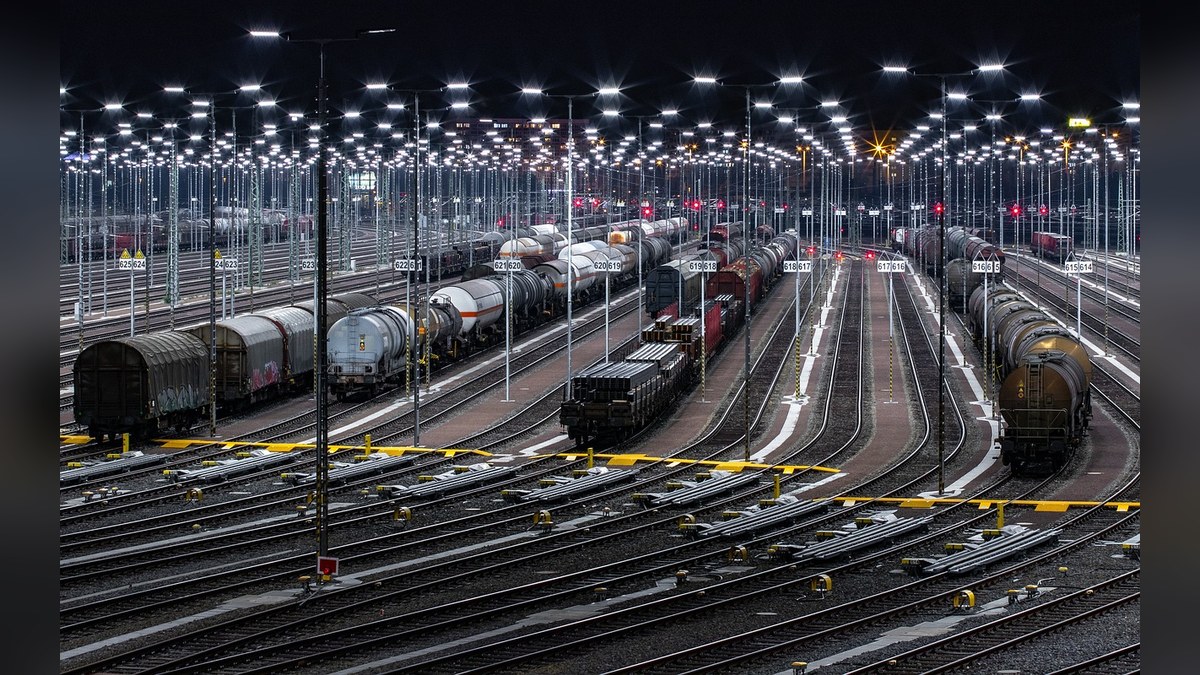
rails, tracks, train, freight transport, rail transport, railway tracks, wagon, railroad, freight depot, marshalling yard, railway line, traffic, freight train, freight train, freight train, freight train, freight train
Image: Photo by Al3xanderD on Pixabay
Poland begins Digital Automatic Coupler mix and match tests in Poznan
Twelve-week campaign in Poznan tests coupler heads and drawgear from different manufacturers for safe combination.
Main source: Digital Automatic Coupler ‘mix and match’ tests start in Poznań · By Rail Post Desk
A fresh round of Digital Automatic Coupler trials has started in Poznan, Poland, this August. The campaign will examine whether coupler heads and drawgear produced by different manufacturers can be combined safely and reliably. The 12-week programme represents the next stage of the Europe’s Rail FP5-DACtiVate project.
According to railwaygazette.com, the tests involve two Polish organisations taking part in DAC testing for the first time: the Łukasiewicz–Poznański Instytut Technologiczny research institute and PKP SA, the parent company of freight operator PKP Cargo. Preparations were discussed at a meeting of the FP5-DACtiVate workstream, where the Polish partners reviewed lessons from earlier trials, including work carried out in Görlitz this spring.
The Poznan programme focuses on the project’s ‘mix and match’ concept, as explained by project partner Rail Sweden. Under this approach, the coupler head and drawgear are treated as separate components connected through a defined interface. This allows components from different manufacturers to be combined, rather than requiring a complete coupler from a single supplier.
The concept is intended to make maintenance, spare-parts management and the transition from screw couplers to DAC more flexible. Testing in Poland will include hump yard impact and failure mode trials, with the project bringing together DAC suppliers Dellner, Knorr-Bremse, Voith and Wabtec.
FP5-DACtiVate is a testing-focused complement to the wider FP5-TRANS4M-R programme. It puts existing designs and specifications through the additional trials needed before pre-deployment. Its work covers coupler safety and component interchangeability, wagon onboard units, and hybrid coupler integration on main line and shunting locomotives.
The Poznan results will feed into a risk analysis and validation plan for ‘mix and match’ configurations. A public report is due before the project ends in December 2026. Formal certification and authorisation fall outside FP5-DACtiVate’s scope. The project is coordinated by Deutsche Bahn, involves 21 partners and has received €5.9m in EU funding out of a total budget of €10.7m.
These trials mark a significant step towards standardising Digital Automatic Couplers across Europe, potentially easing the transition from traditional screw couplers. The ability to mix components from different suppliers could reduce costs and improve supply chain resilience for freight operators.
The involvement of Polish institutions for the first time broadens the geographic and technical base of DAC testing. Lessons from Poznan will inform future deployment strategies and help refine the technical specifications needed for widespread adoption.
As the project progresses, stakeholders will be watching closely to see how the ‘mix and match’ concept performs under real-world conditions. The outcomes could shape the future of freight coupling technology across the continent.